

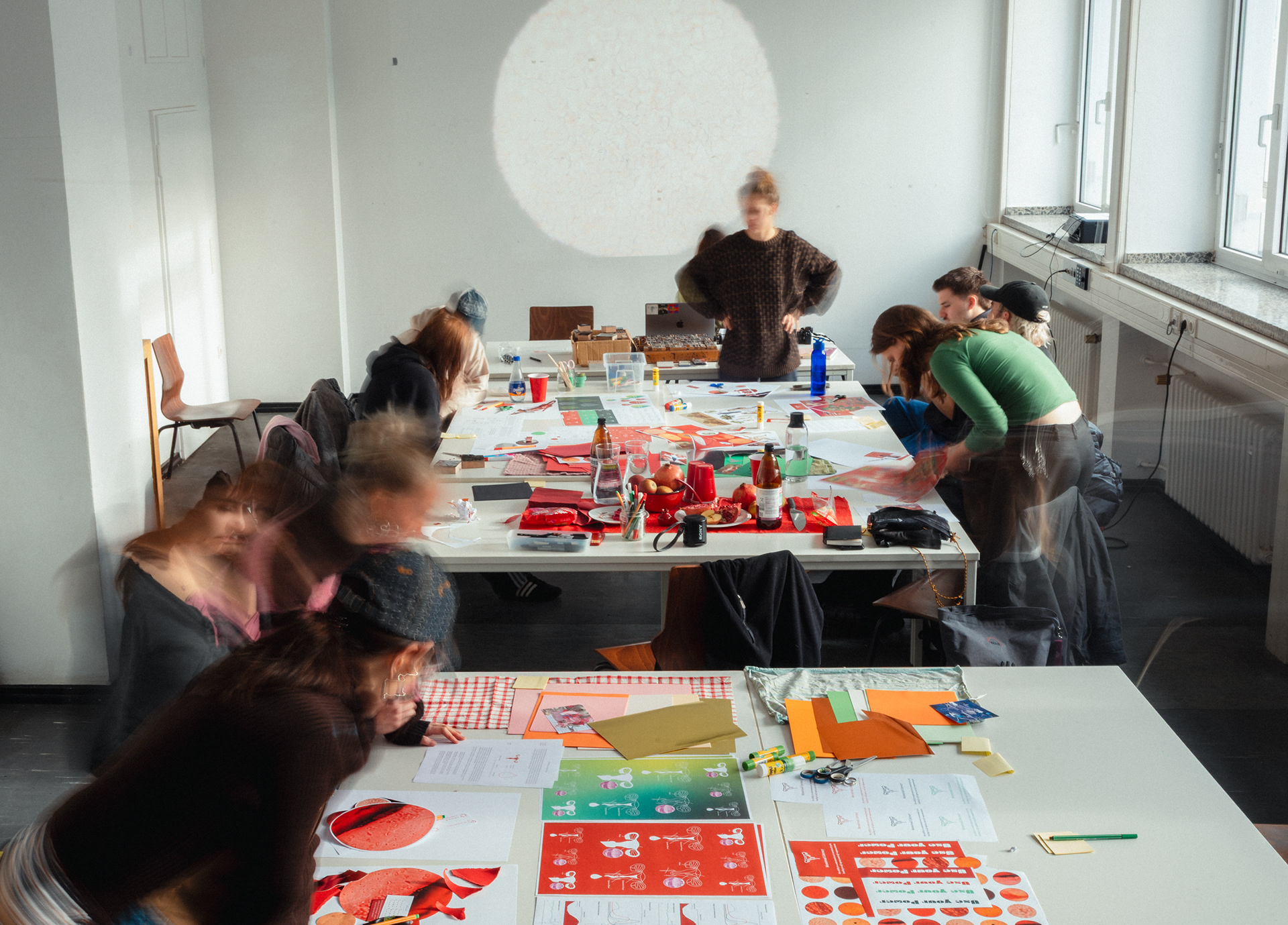
As part of the 30-year celebration of Gender and Design at the Köln International School of Design, titled "Untrouble," I was invited to presente a workshop on menstrual literacy.
This workshop introduced participants to the emerging field of menstrual blood diagnostics and presented the concept of menstrual literacy, which is the ability to understand, interpret, and act on the biological information contained within one’s menstrual cycle. Menstrual literacy builds on traditional body literacy by emphasizing the meaningfulness, accessibility, and underutilization of menstrual blood as a health resource.
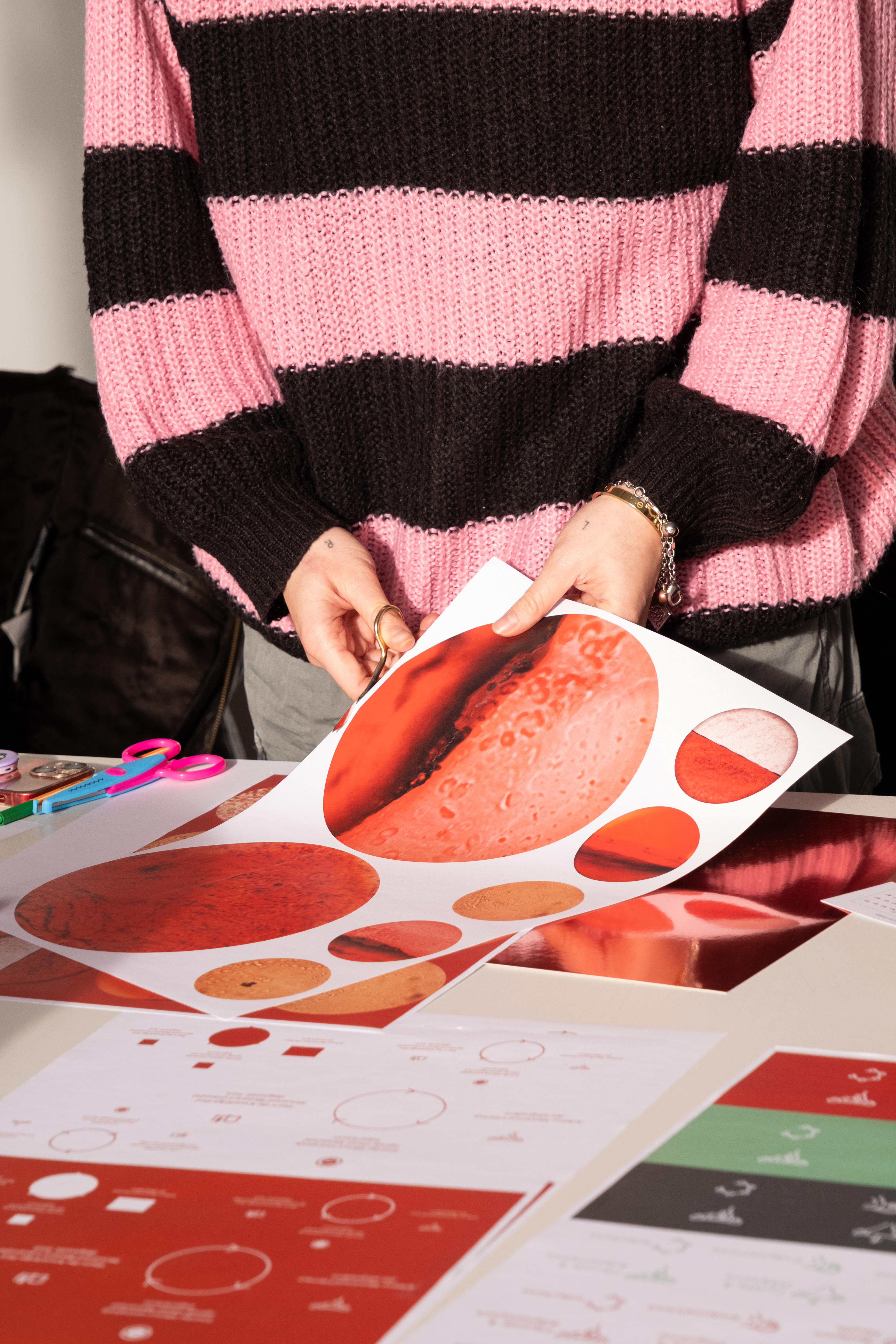
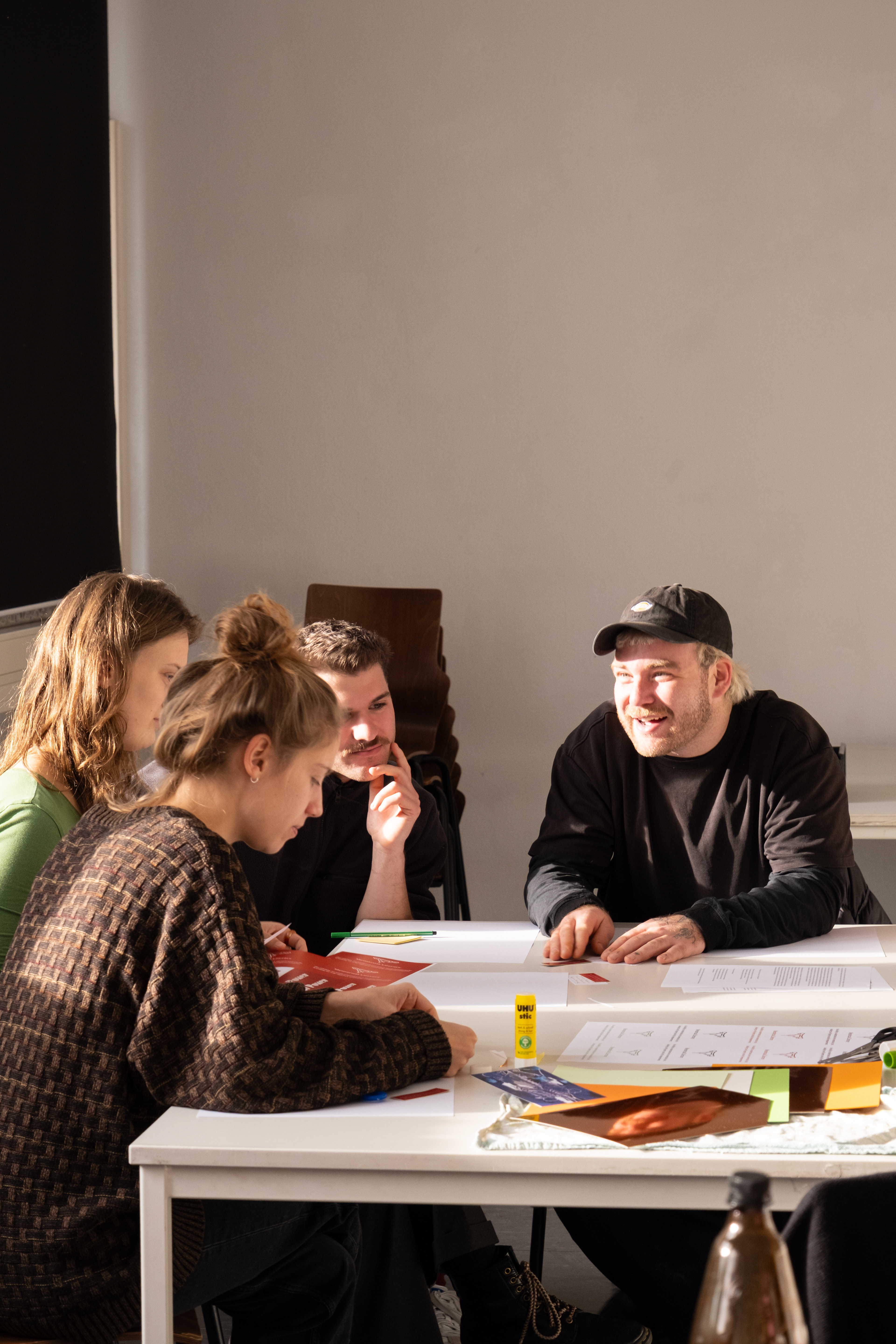

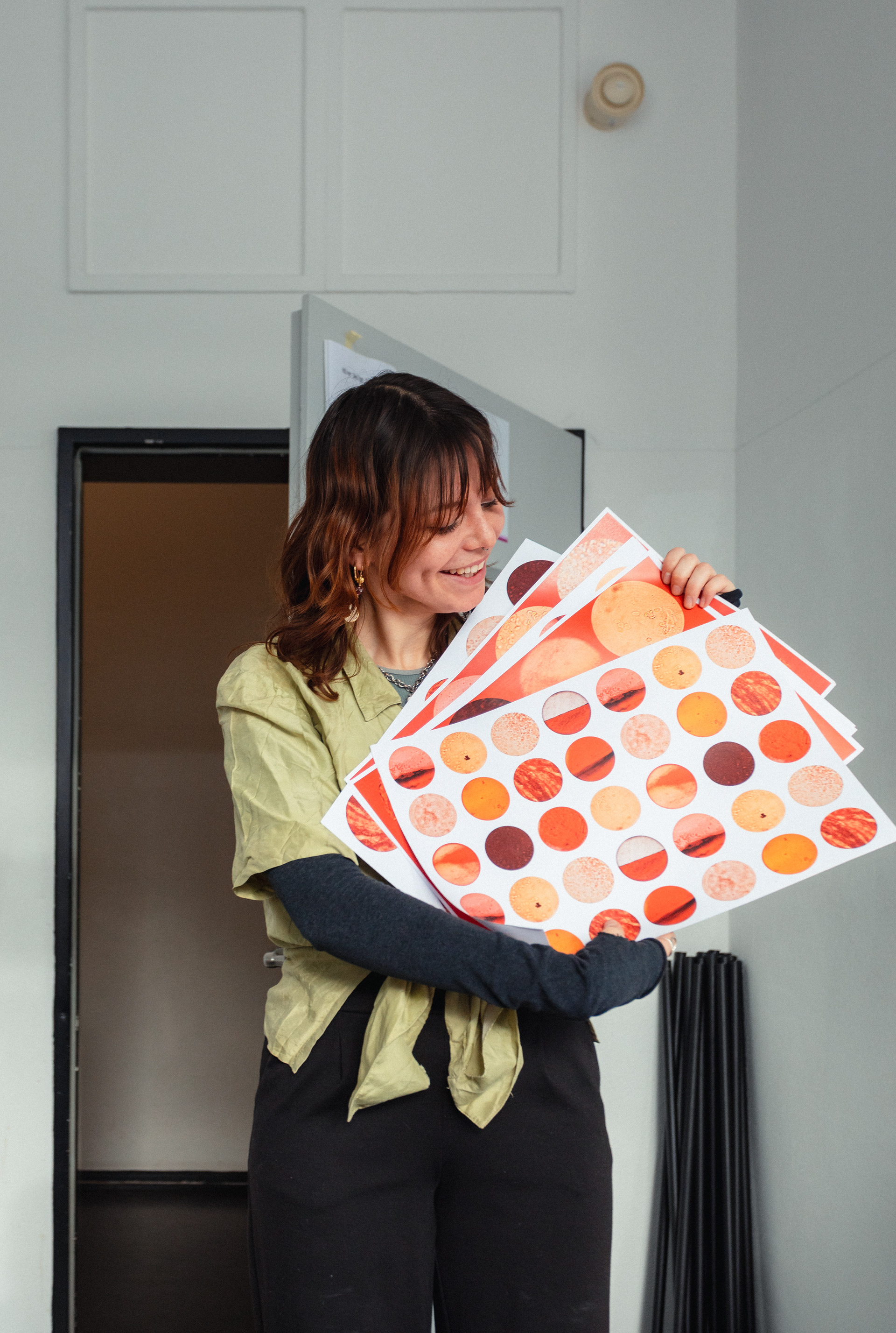
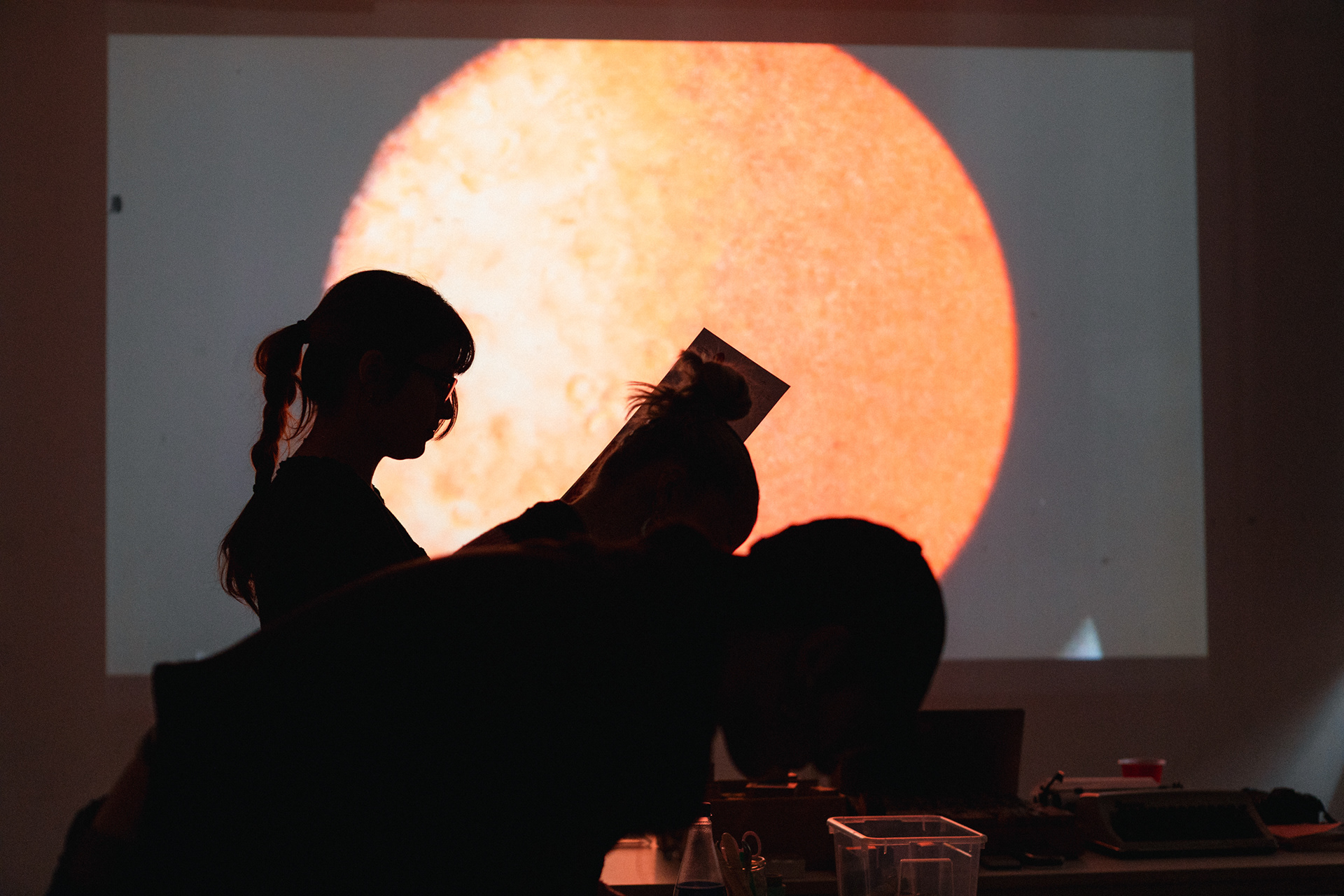
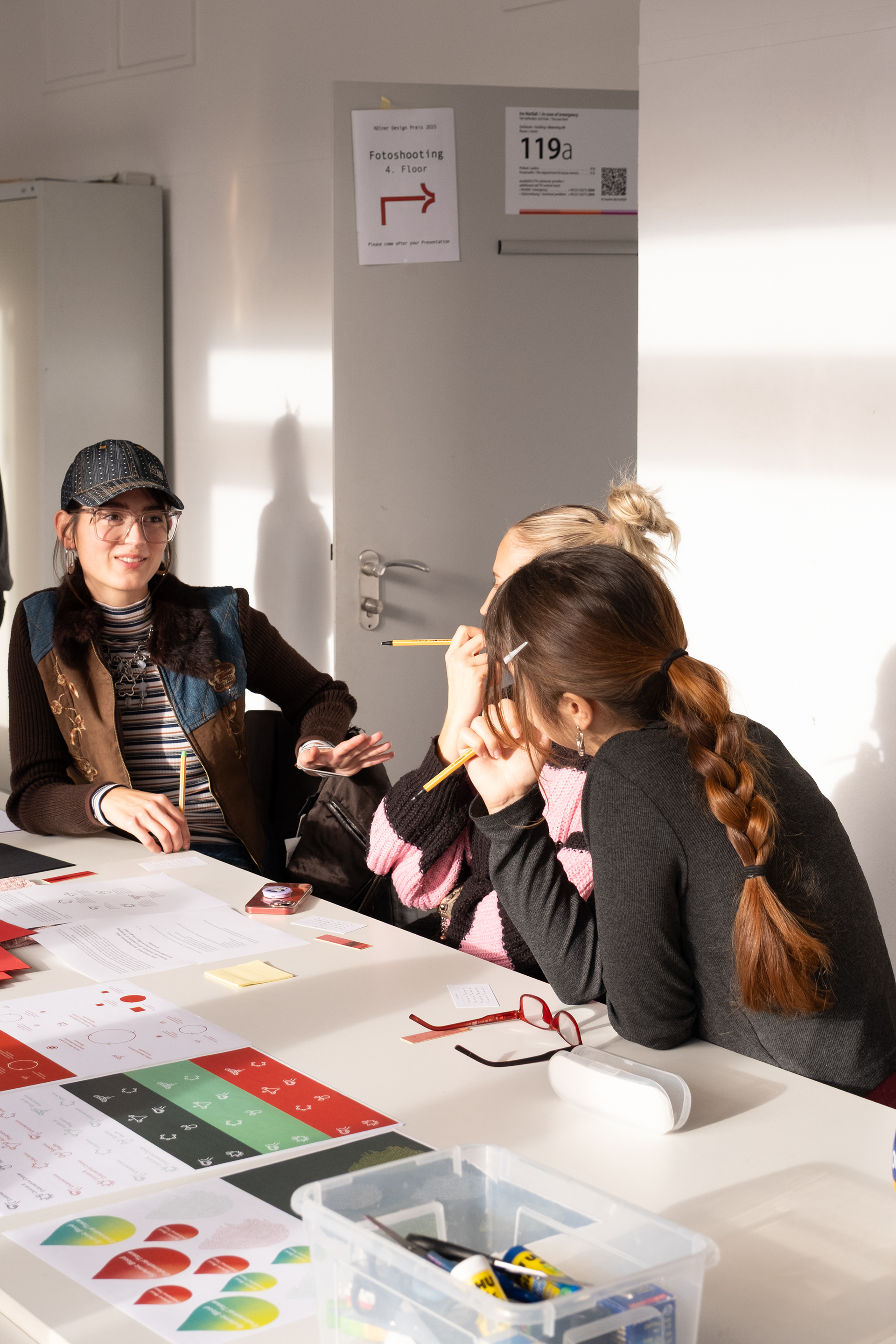

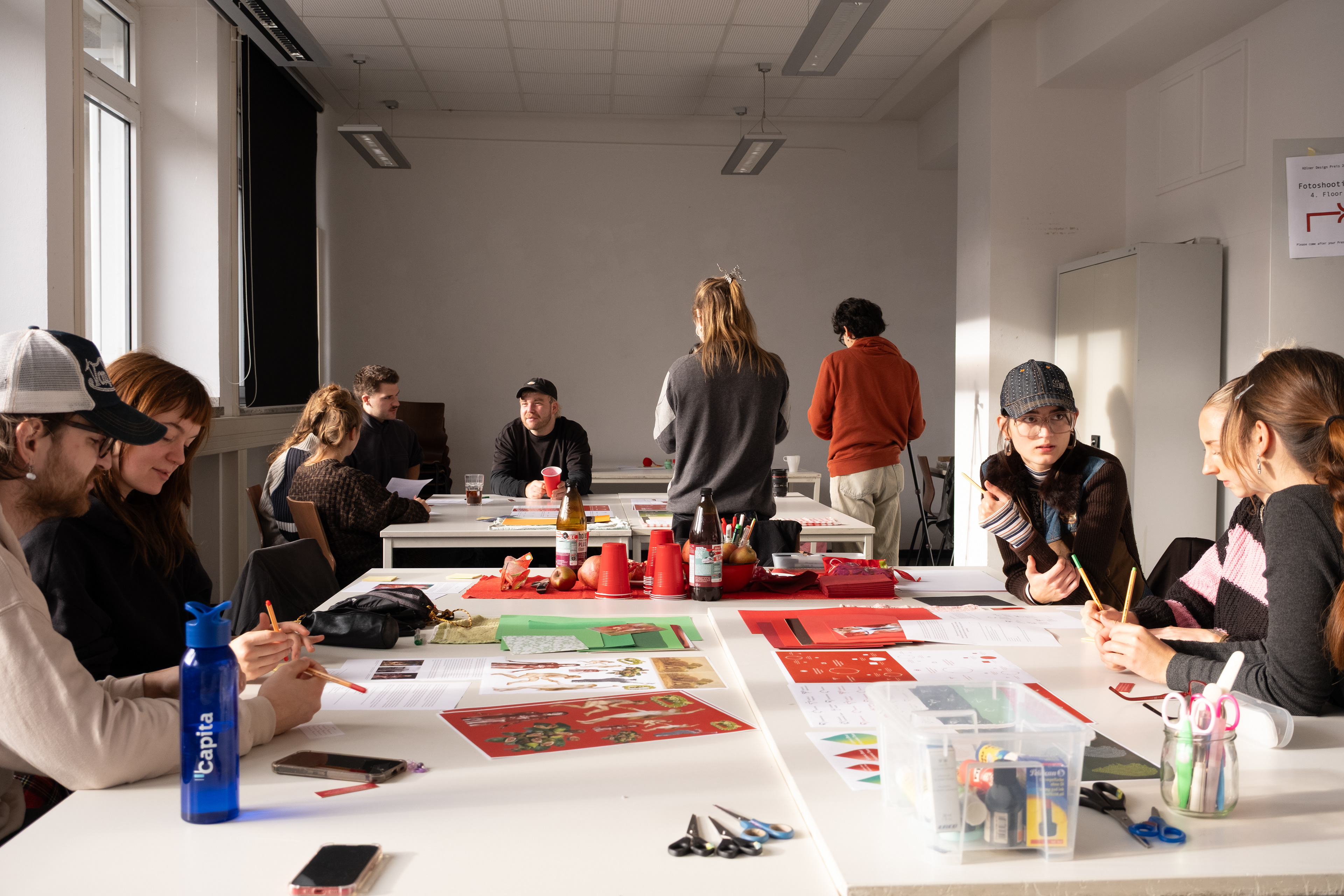
The session incorporated scientific insights, feminist theory, and interactive learning activities. After a brief introduction to current research and diagnostic technologies, participants explored thematic stations in small groups. Each station offered academic sources, a short quiz, and an open reflective question. Participants shared their responses on sticky notes, creating a collaborative map of perspectives, questions, and lived experiences. They also collected collage materials at each station in order to create their own poster that symbolized the knowledge they gathered along the way.
The workshop concluded with a shared "future" station where the group reflected on the process and imagined upcoming possibilities for menstrual blood in healthcare, including new biomarkers, decentralized diagnostics, and shifts in cultural narratives. The discussion emphasized the importance of accessible education, cross-sector collaboration, and ethical frameworks for data justice.
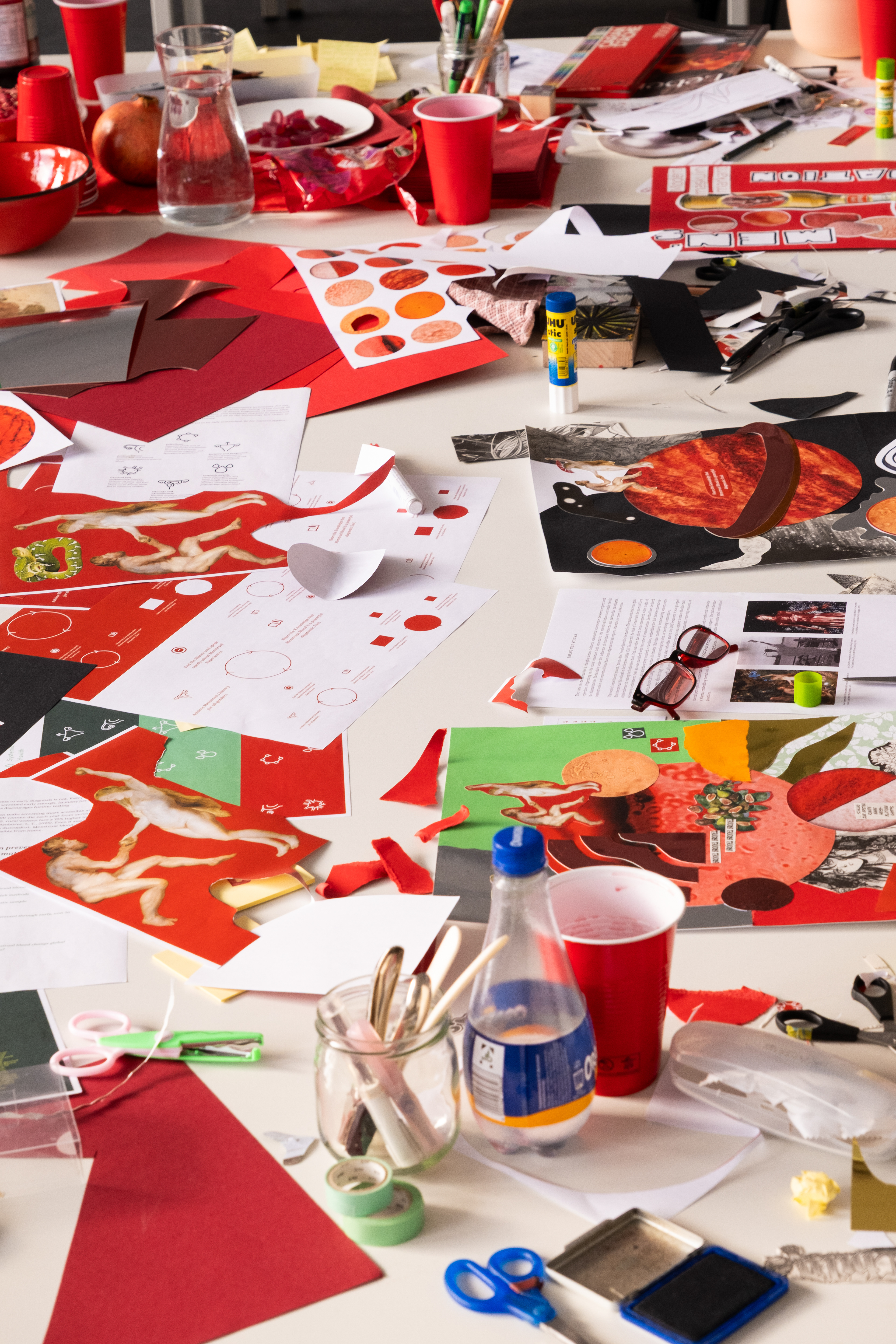
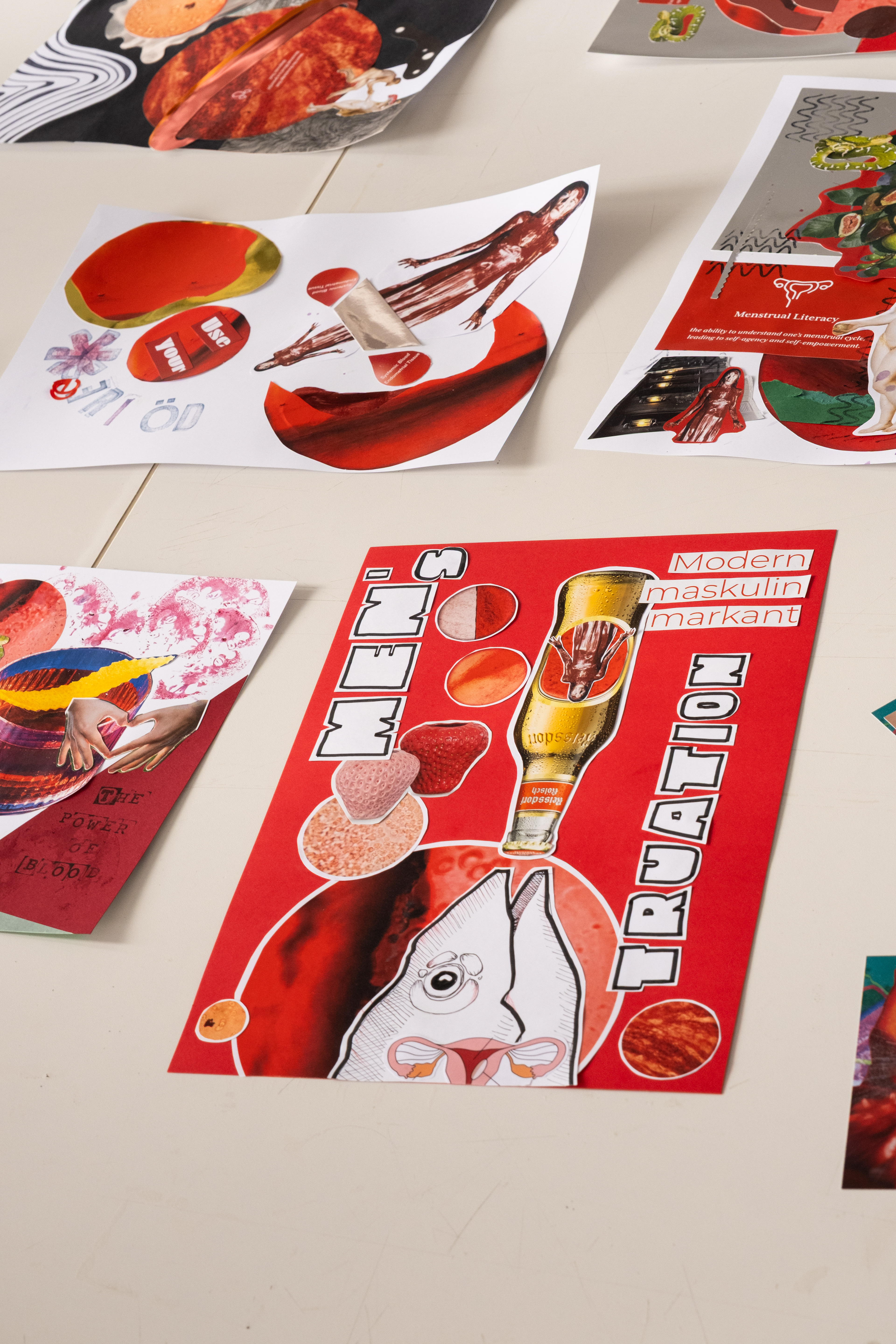
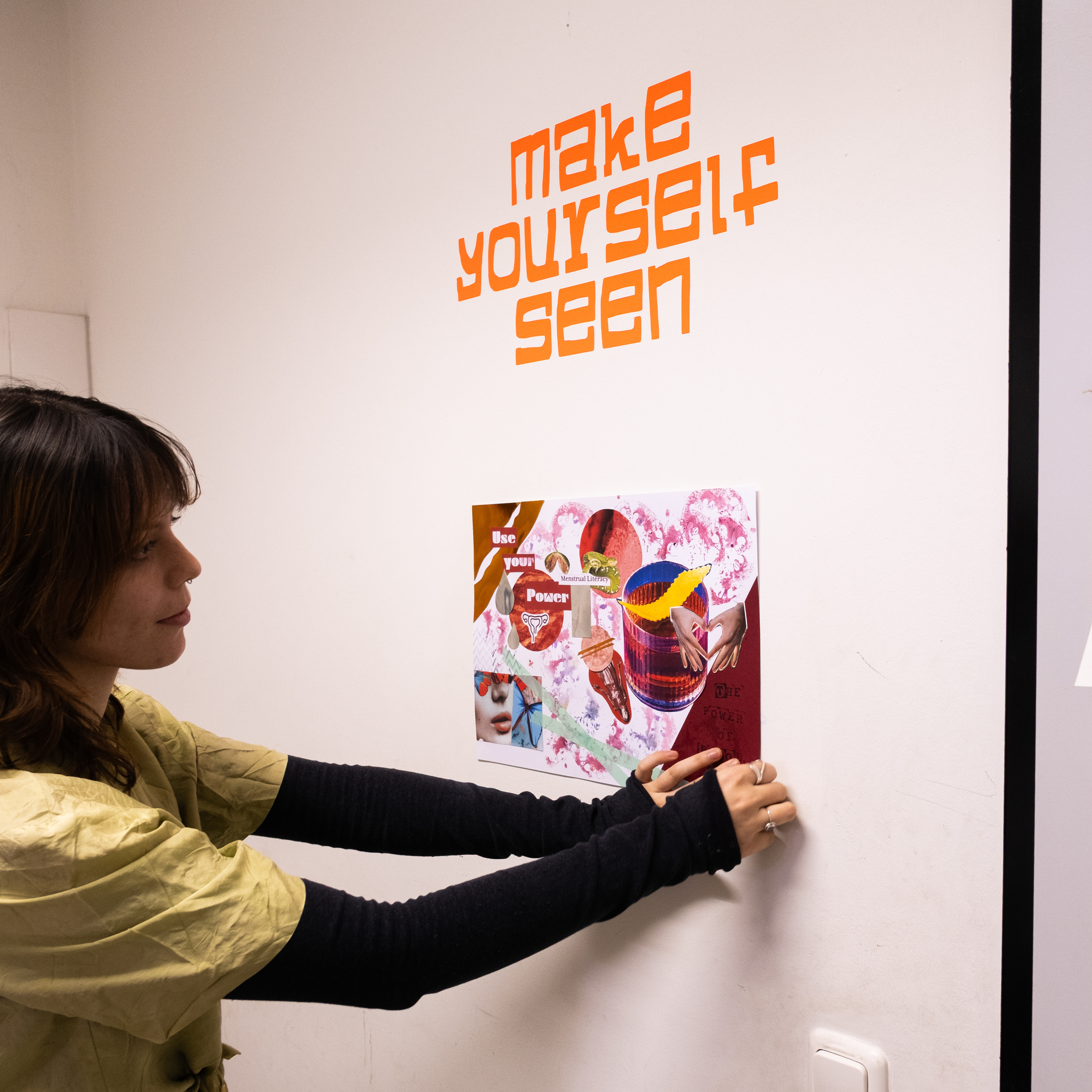
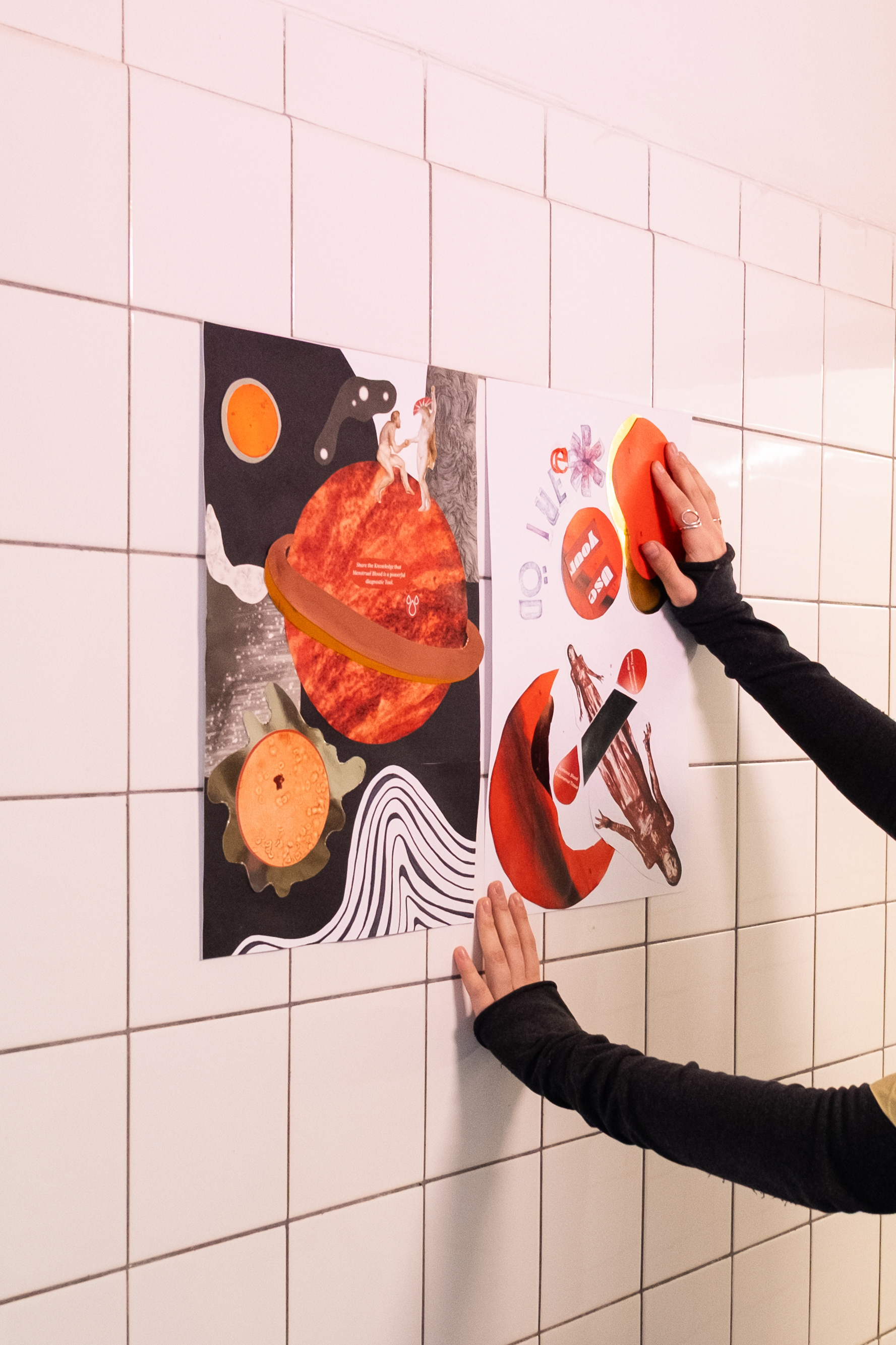
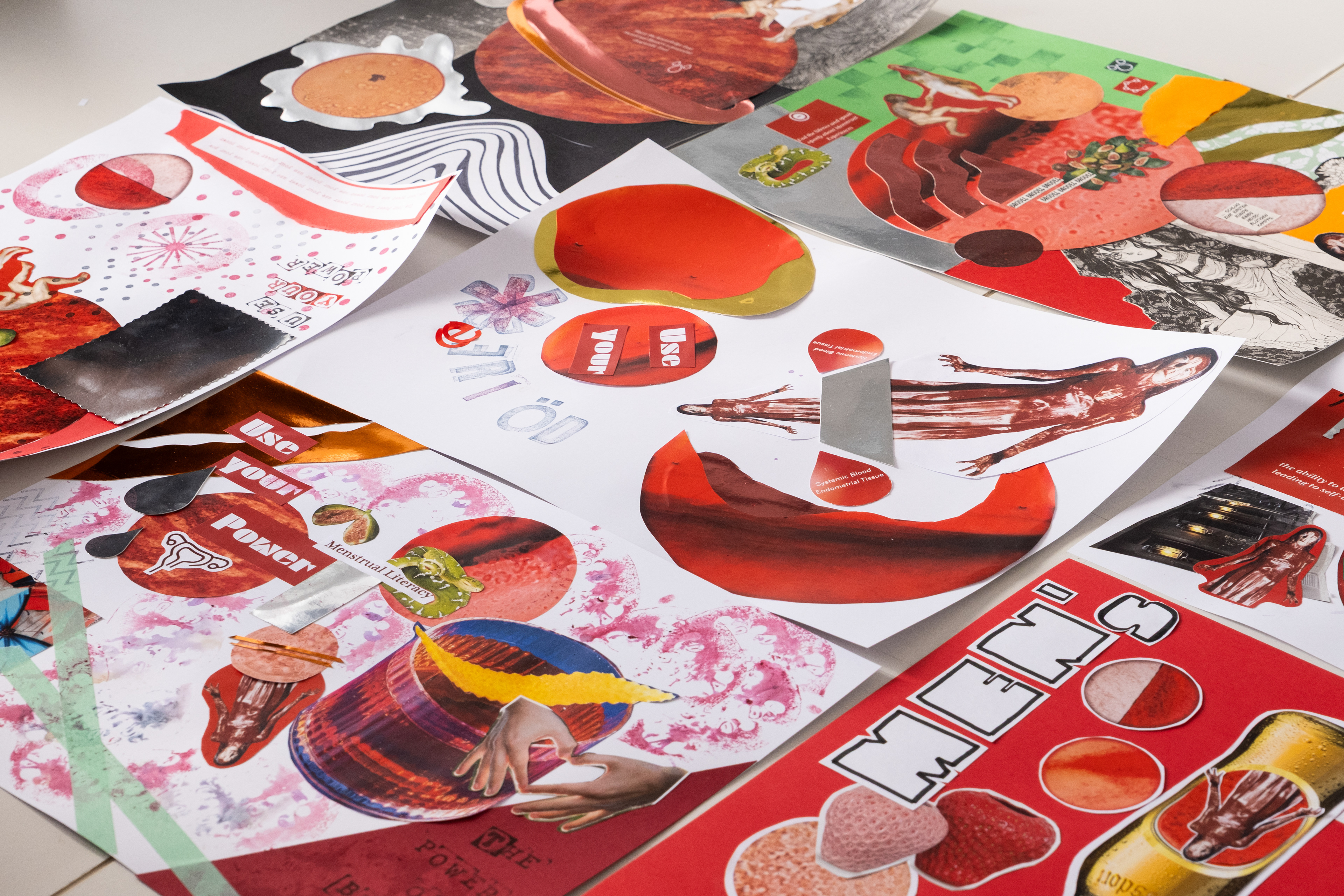
Overall, the workshop created an approachable, research-informed, participatory space to rethink menstruation beyond stigma. It demonstrated that, when given the tools to understand their cycles, people can achieve menstrual literacy, which becomes a form of self-agency. This shifts the conversation from concealment and pathologization toward knowledge, autonomy, and equitable healthcare.