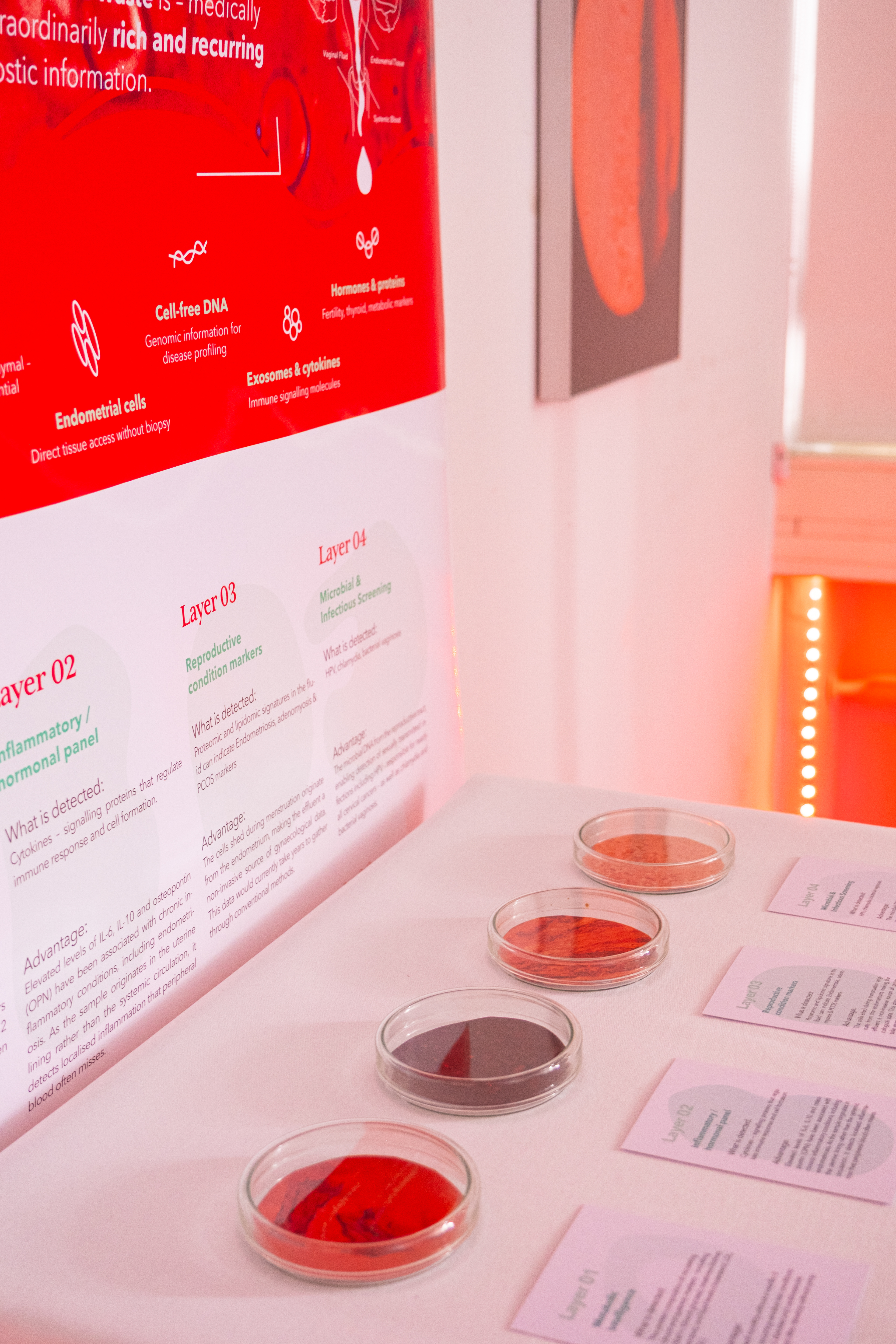

We are 1.8 billion people on this planet menstruating, on average within 450 cycles a lifetime, ~30-80ml menstrual effluent shed per cycle. Menstruation is a an information-rich essential process of the female body, but what did we do the past hundreds of years?
We have treated this healthy, bodily process as something to conceal as quickly as possible. Because of the huge menstrual stigma and the general neglect of female bodies within medical research we are now facing a huge gender data gap.
If we’d put all the effort in menstrual blood research instead of concealing MB, we could have already closed a big part of the gender data gap. Why? Because menstrual blood could be used as a non-invasive, at-home monthly self check-up. But we’ve ignored this tremendous potential and instead we’re trying to cover up menstruation with blue flowers and pleasant smells.
So the question I started with was simple: what would the world look like if we finally acknowledged and treated menstrual blood as the valuable resource it already is?My project, Cuora, is a speculative femtech brand built around one vision: a world where menstruation is not stigmatised, but finally valued as an essential process of the female body. And the more I researched, the more I realised this world is far less speculative than I thought. Because menstrual blood is not waste. It is a diagnostic resource.
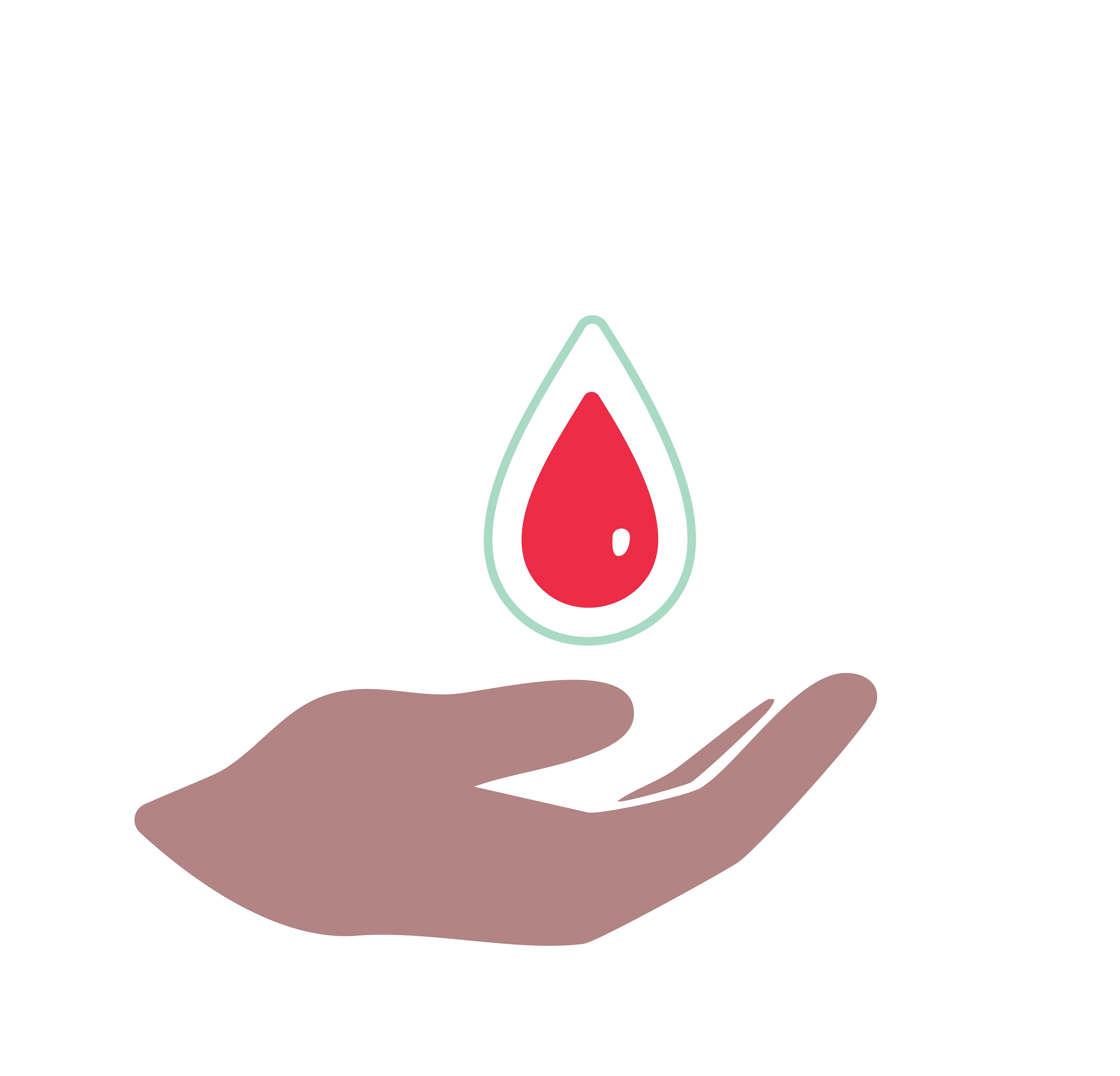
Collecting your Menstrual Blood
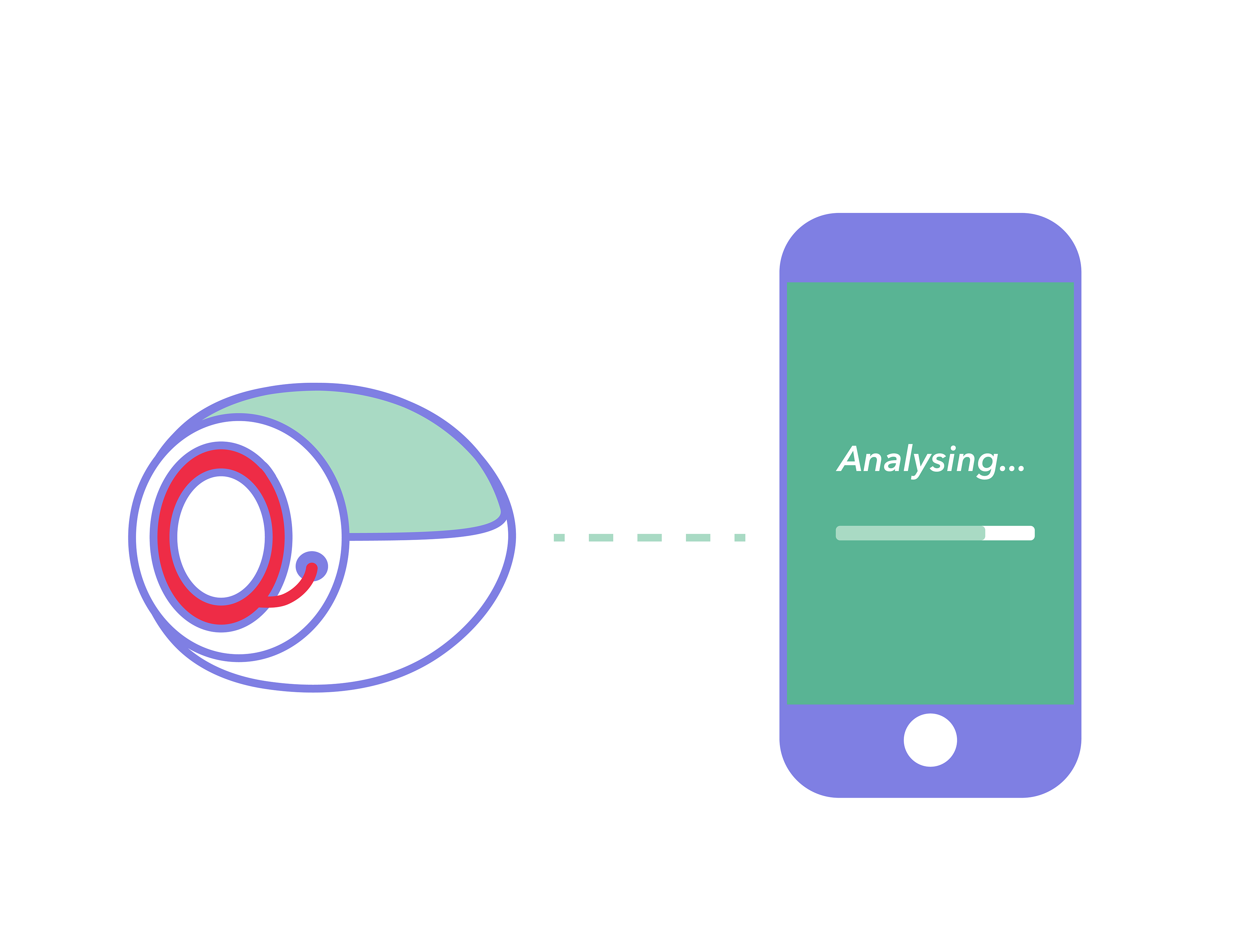
Analysing our Menstrual Blood and sending the results to an App
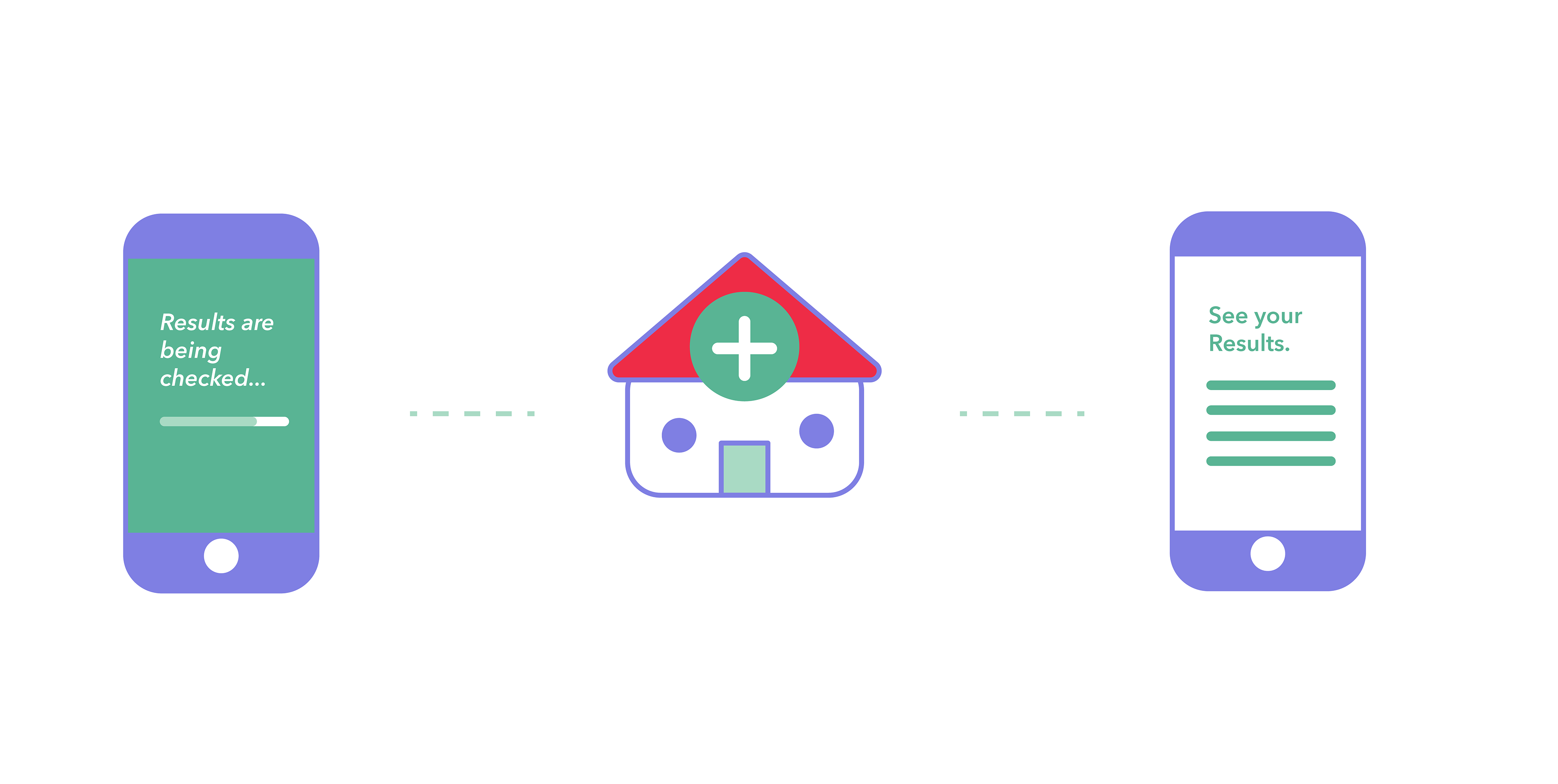
Evaluating and contextualising the results via a gynecological centre
The core concept of Cuora is based on the speculative workflow for a monthly at-home self test.
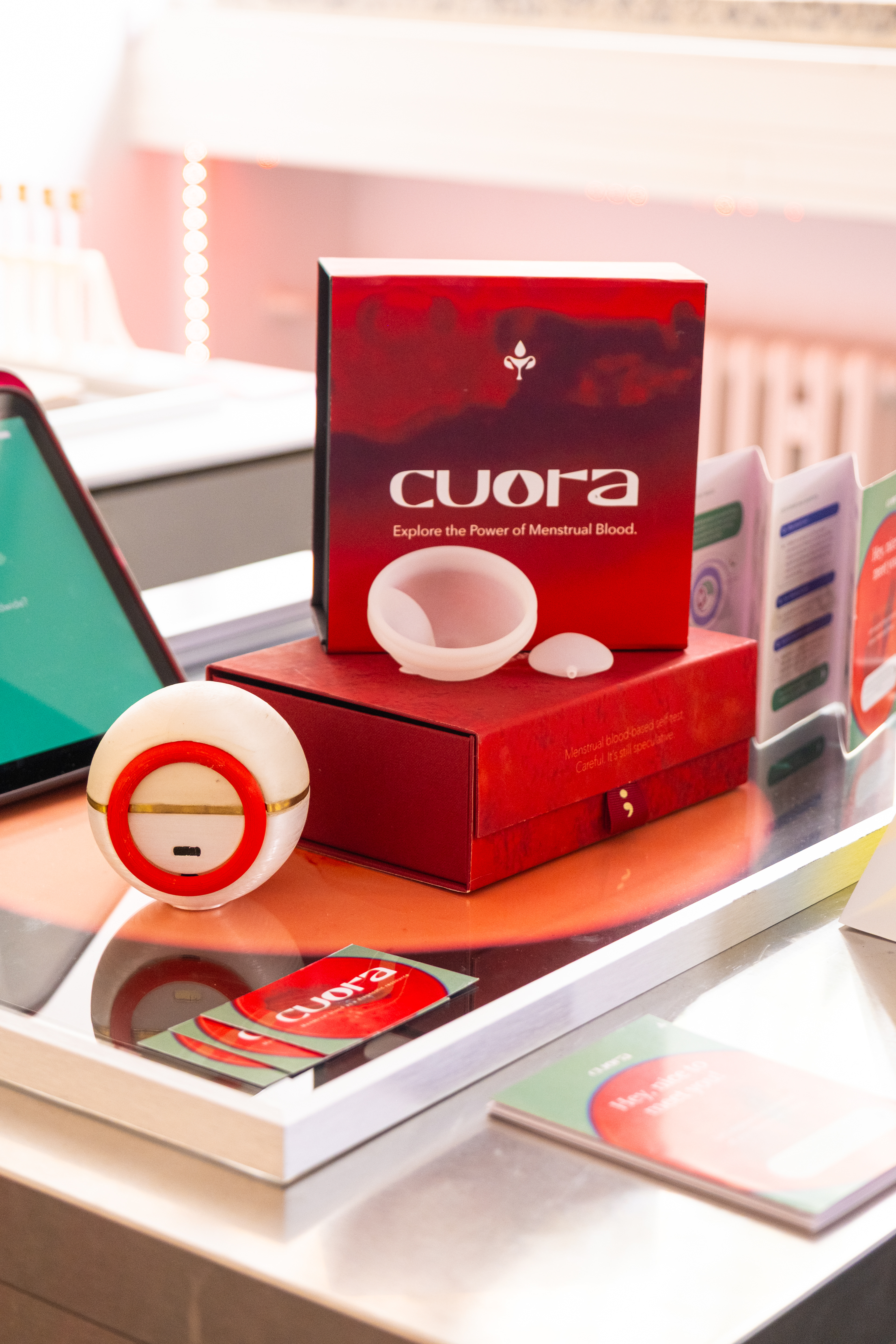
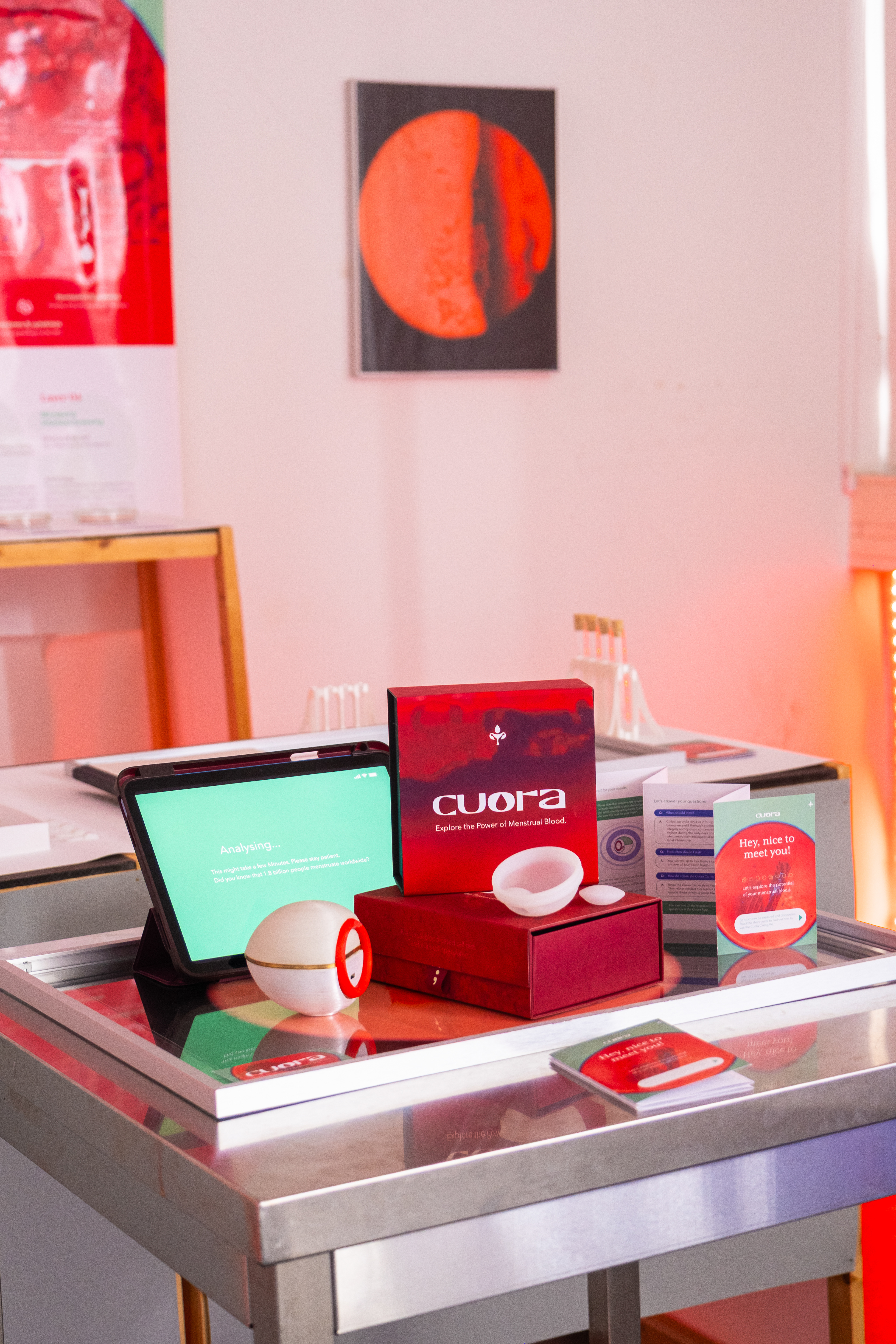
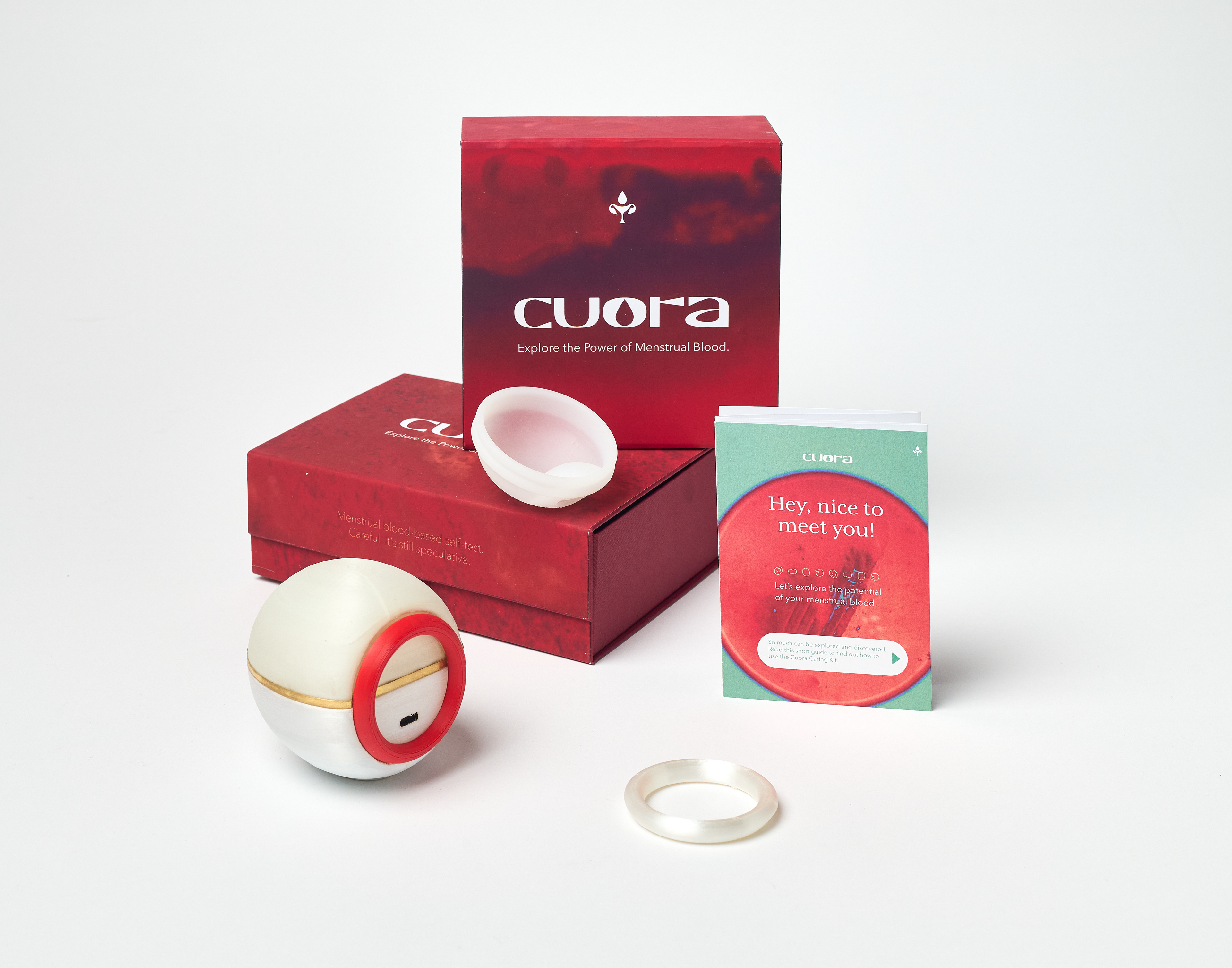
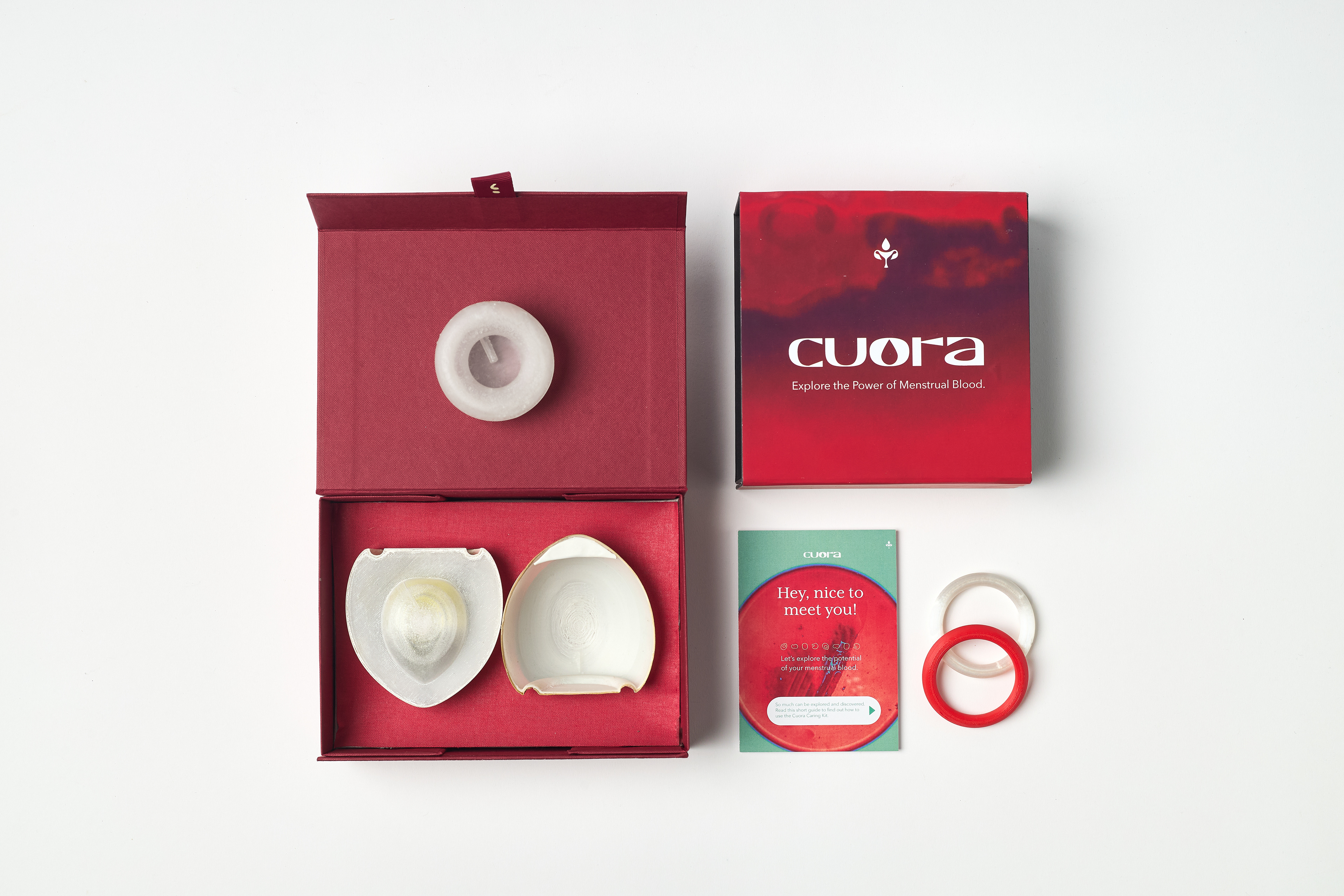
Therefore Cuora takes the shape of a system: the Cuora Caring Kit. The kit features two physical products, the Carrier, which collects the sample, and the Analyser, which processes it. With the Carrier the User can collect their menstrual blood in a standardised and lab-graded way. This sample can then be further processed with the analyser which sends the analysed results to an App.
The App contextualises the results and sends them to their personal gynecological centre where the results can be evaluated. This system ensures that sensitive results can first be seen by medical guidance and non-sensitive results can be directly shared with the user.
This workflow is the base for the following prototyping of the Carrier and the Analyser.
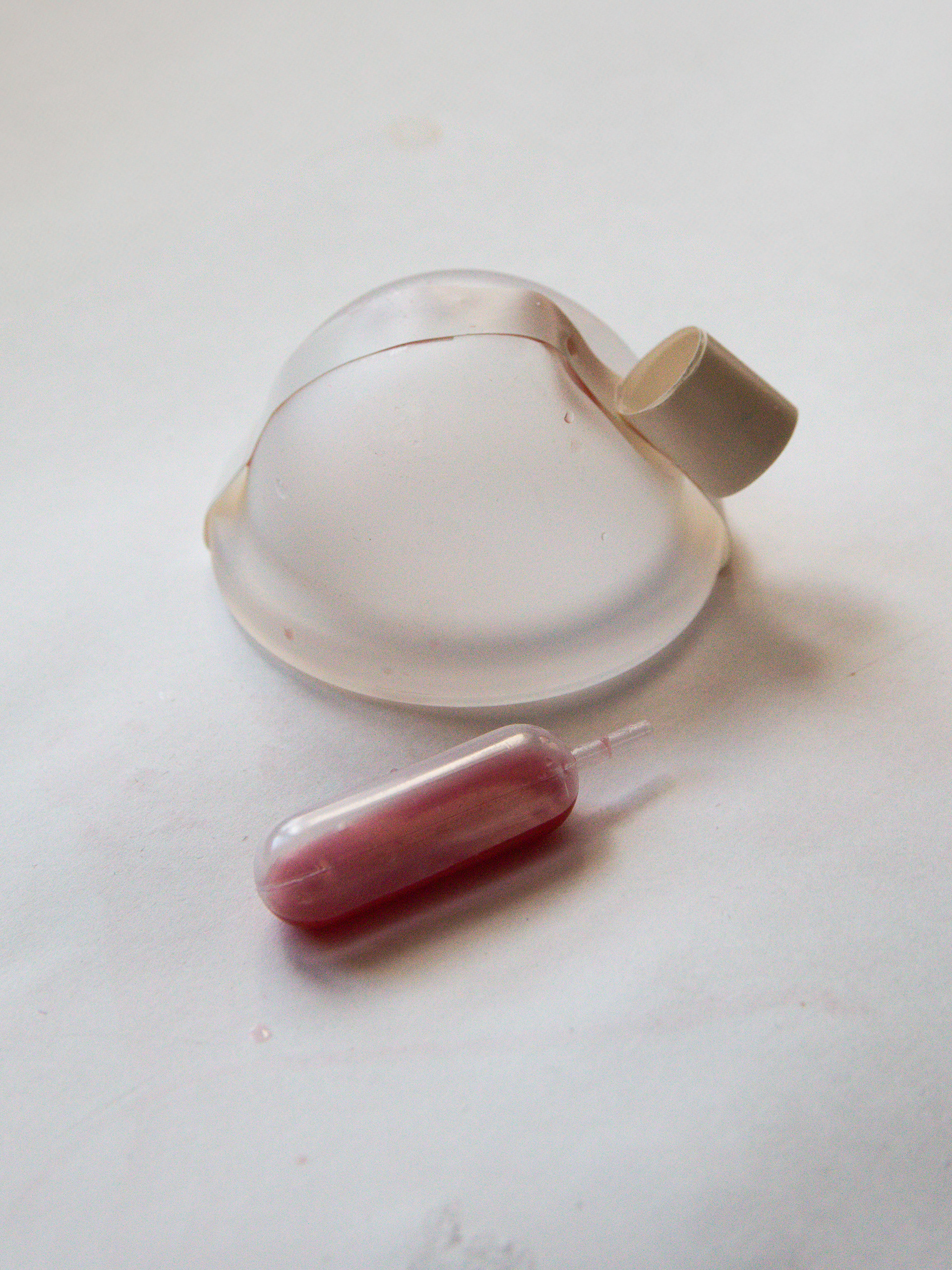
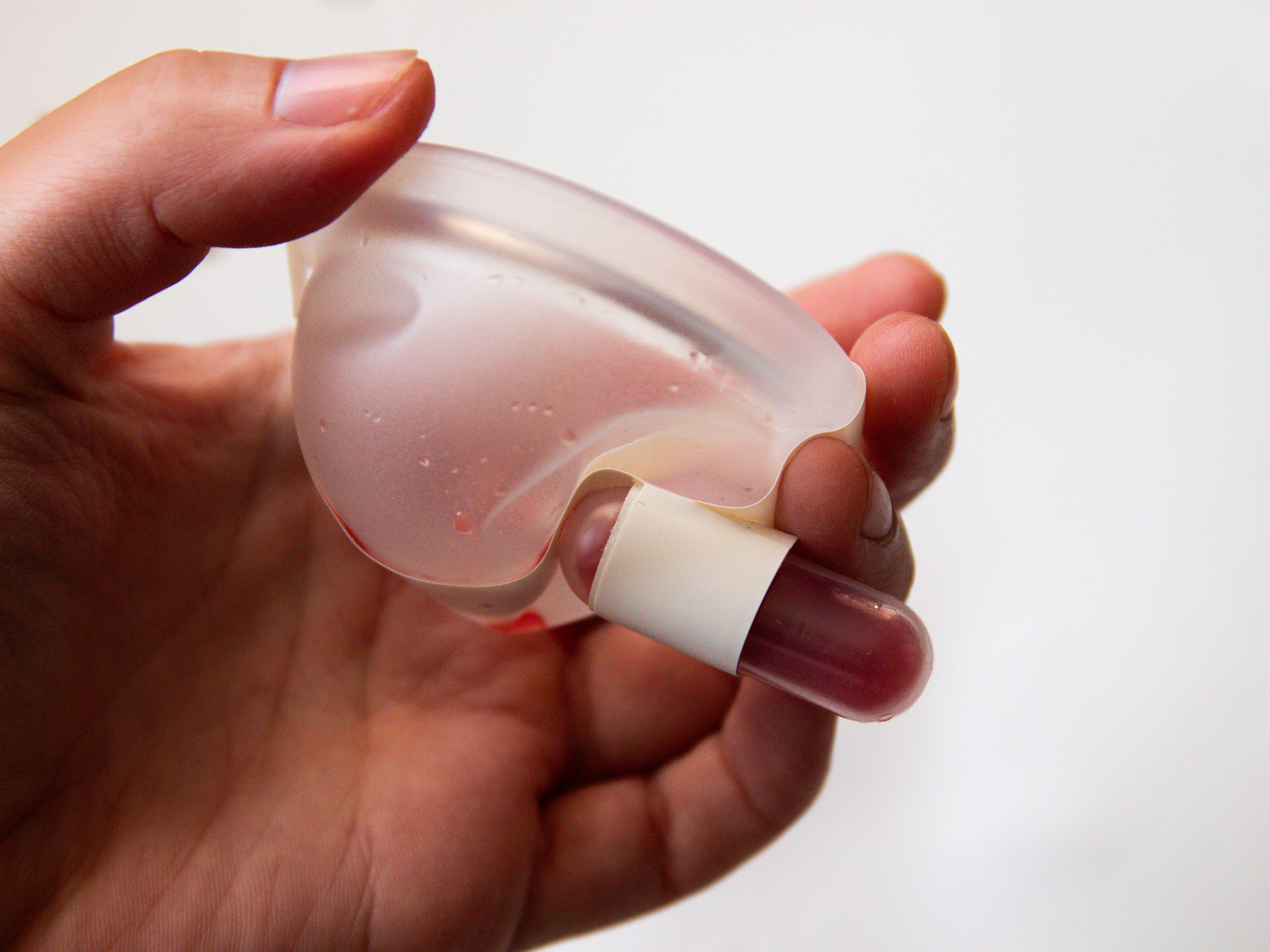
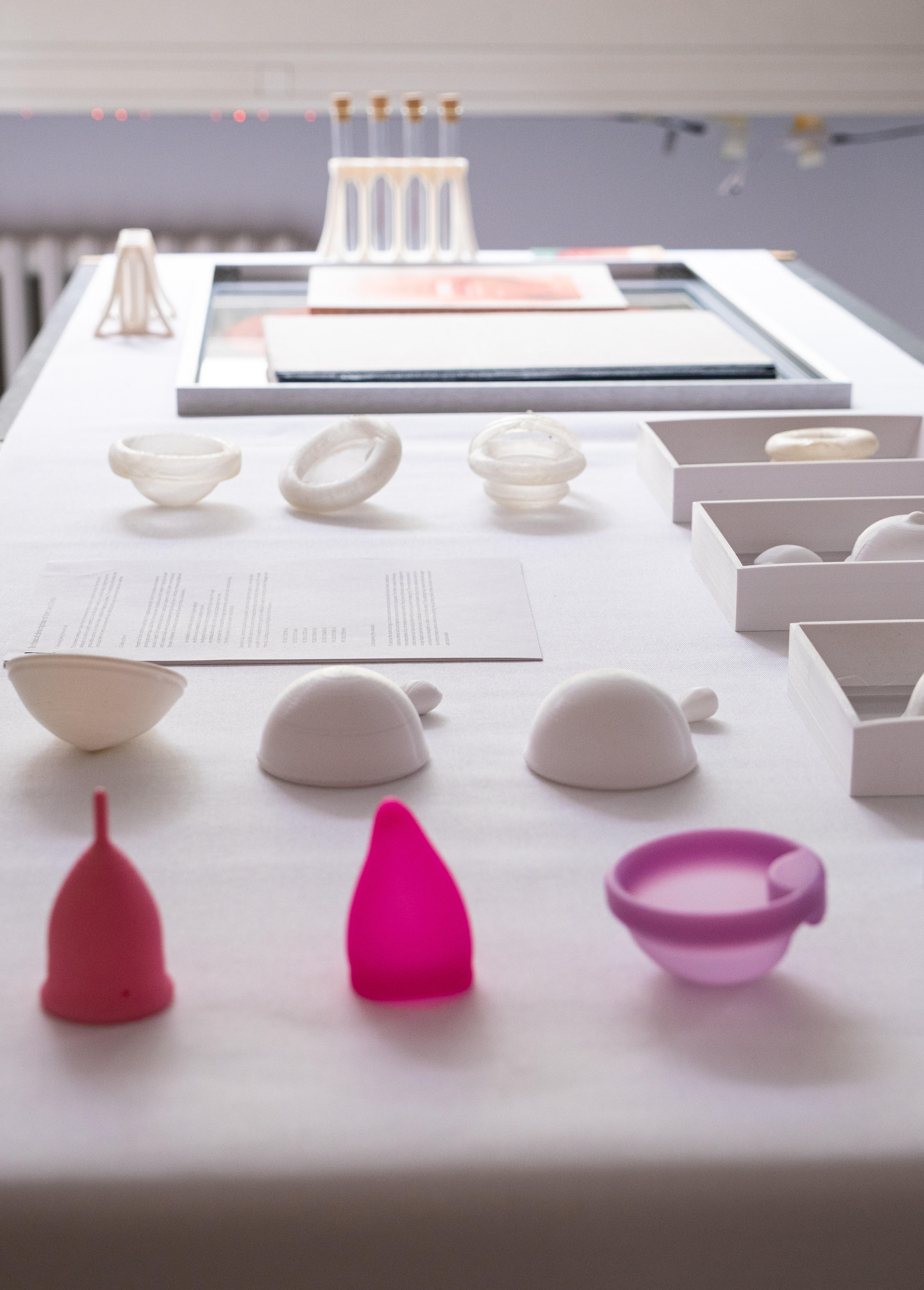
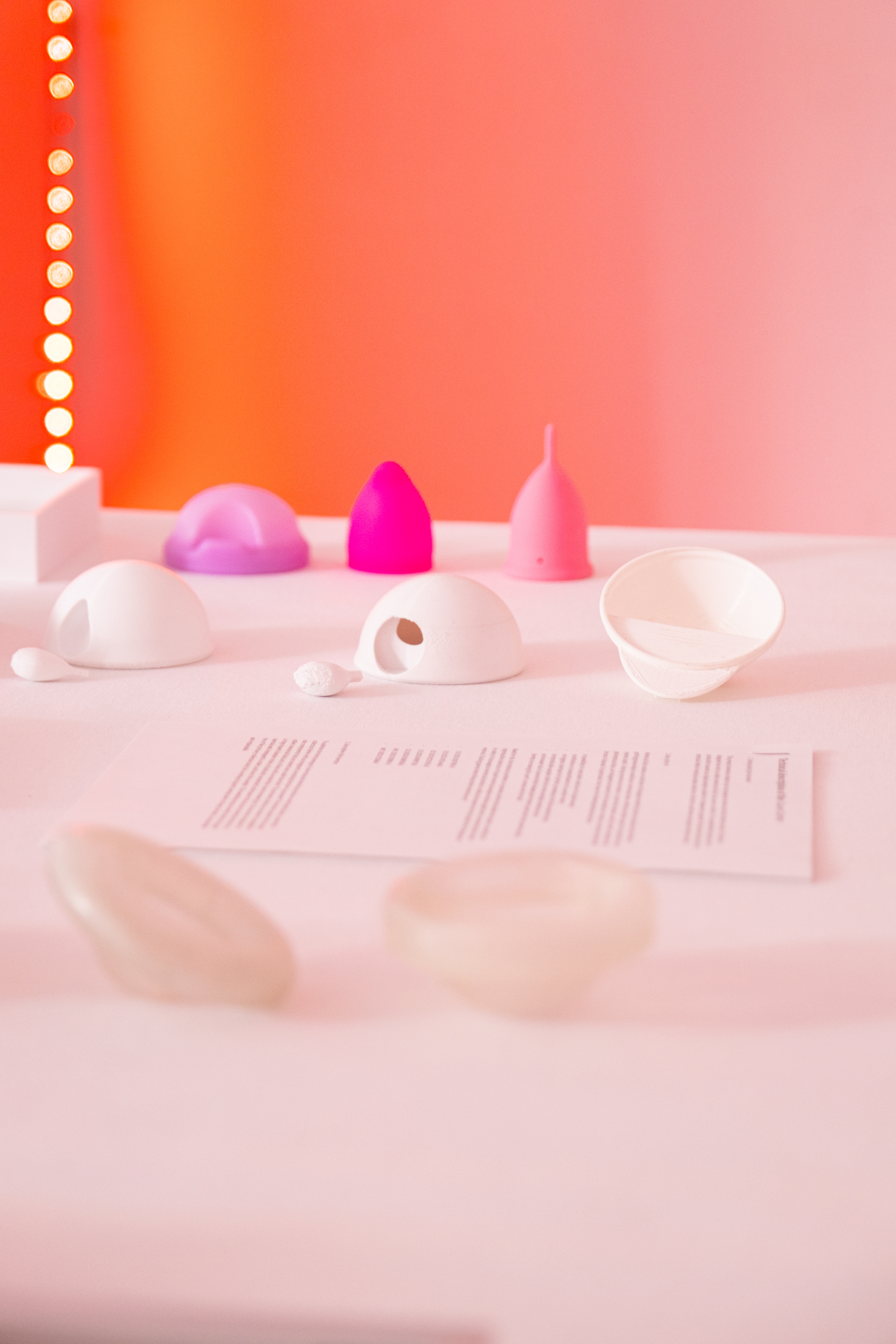
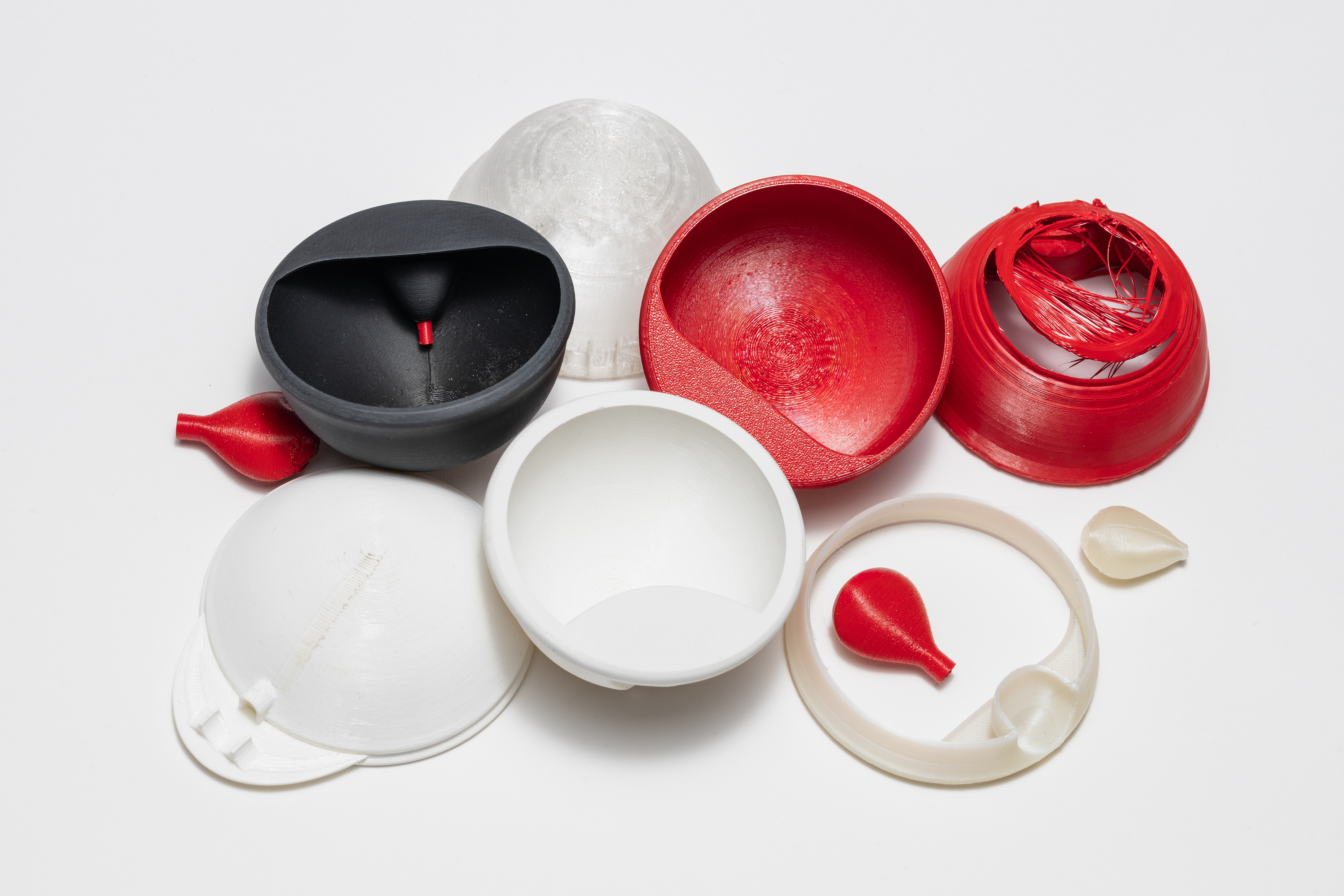
What followed was ten iterations for the Cuora Carrier. Not because the first nine failed, but because each one taught me exactly what the next one needed to solve.
It started deliberately primitive: a cake-decorating pipette attached to a commercial menstrual disc. This was built to test the roughest possible version of the collection mechanism and this mechanism always staied the same. Inspired by a simple pipette mechanism I wanted two chambers within the product: The primary chamber (disc) for the first collection and the secondary chamber (pipette) for the further use of the collected effluent.
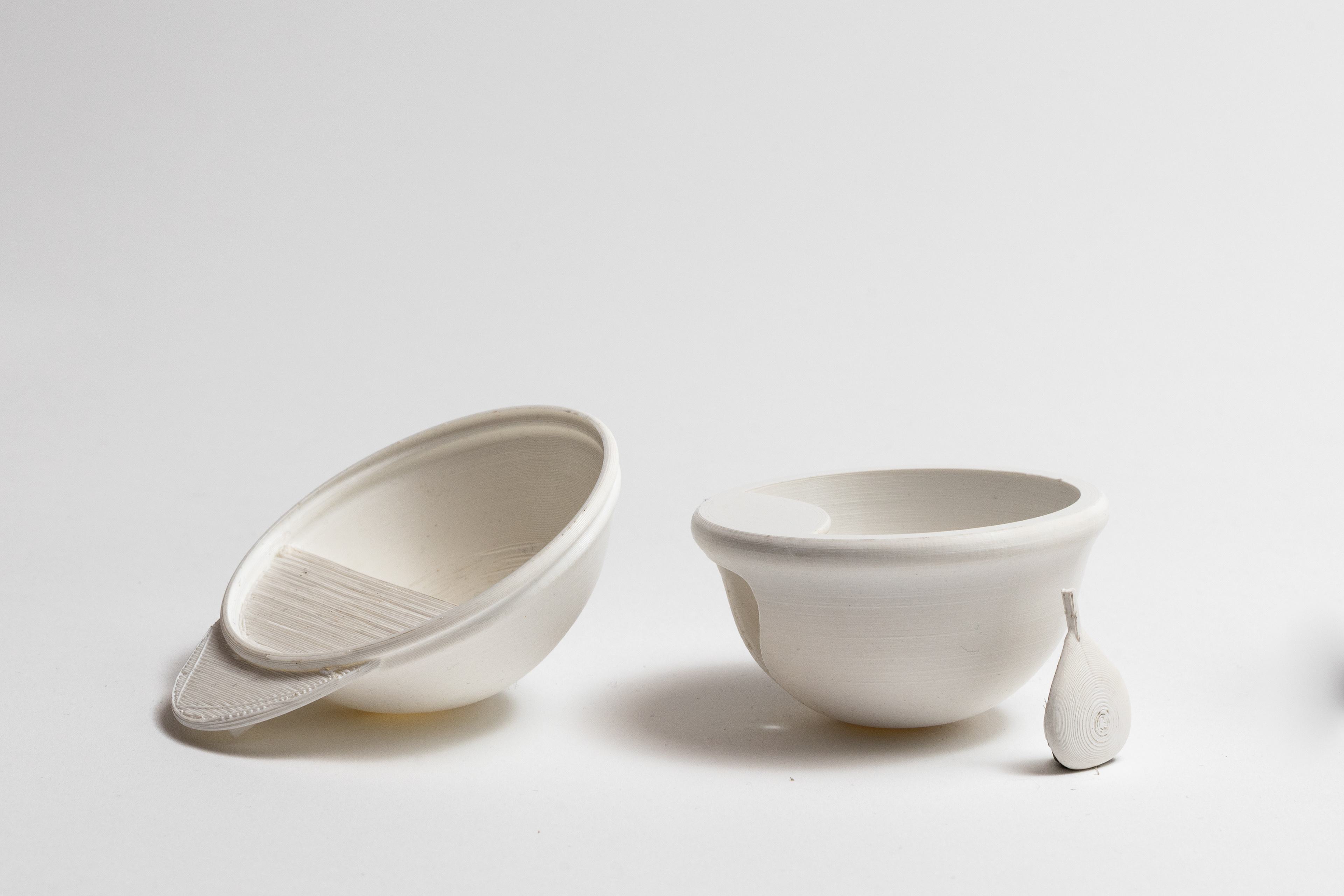
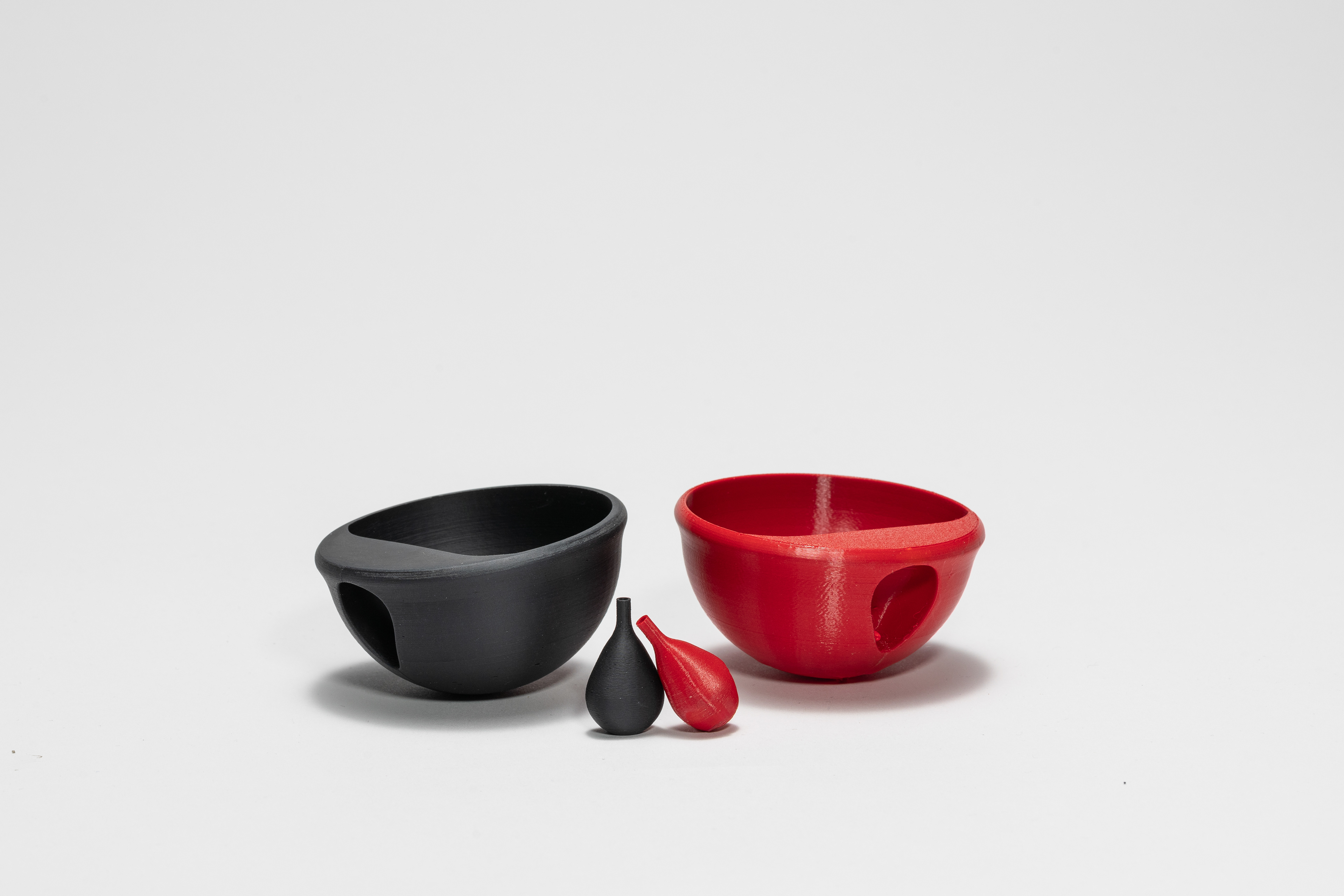
Consequently, the entire Carrier mechanism works on compression. By compressing the pipette a vacuum is created inside which draws the effluent from the primary chamber into the secondary chamber. Everything has evolved around this one constant idea.
By the third prototype, I had moved the pipette body inside the disc itself – inside the finger notch, so that the pipette get’s activated by the finger upon removal. From here, I iterated through different pipette volumes, shapes and forms, chasing both ergonomics and flexibility.
Material was never a cosmetic choice at any of these stages; each one tested a different question. While PLA and PETG are quickly to print, I used them for testing the geometry and the overall shape. Furthermore, I have used TPU to approximate the flex of real silicone. This helped me a lot with the design since I could finally test how the products bends.
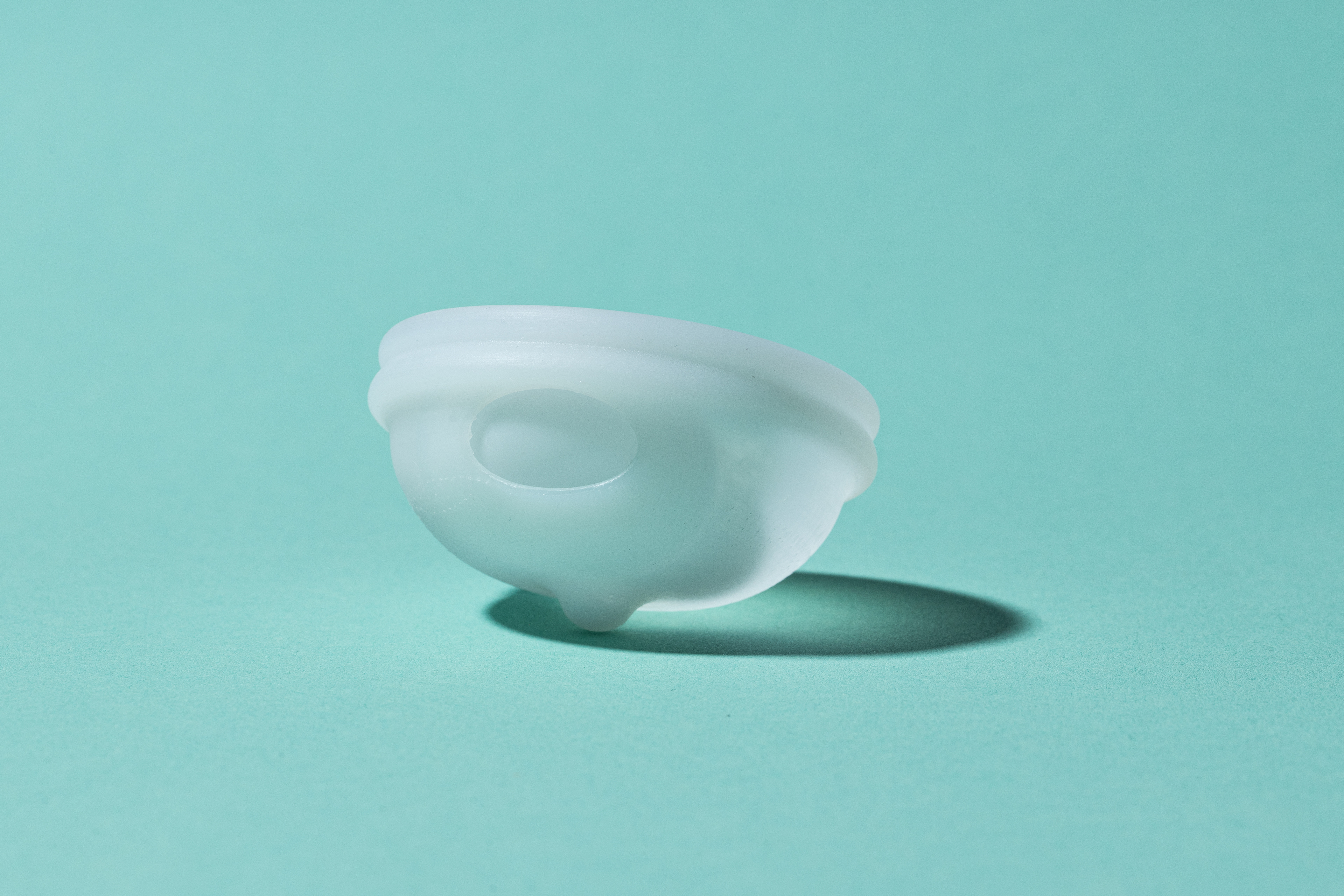
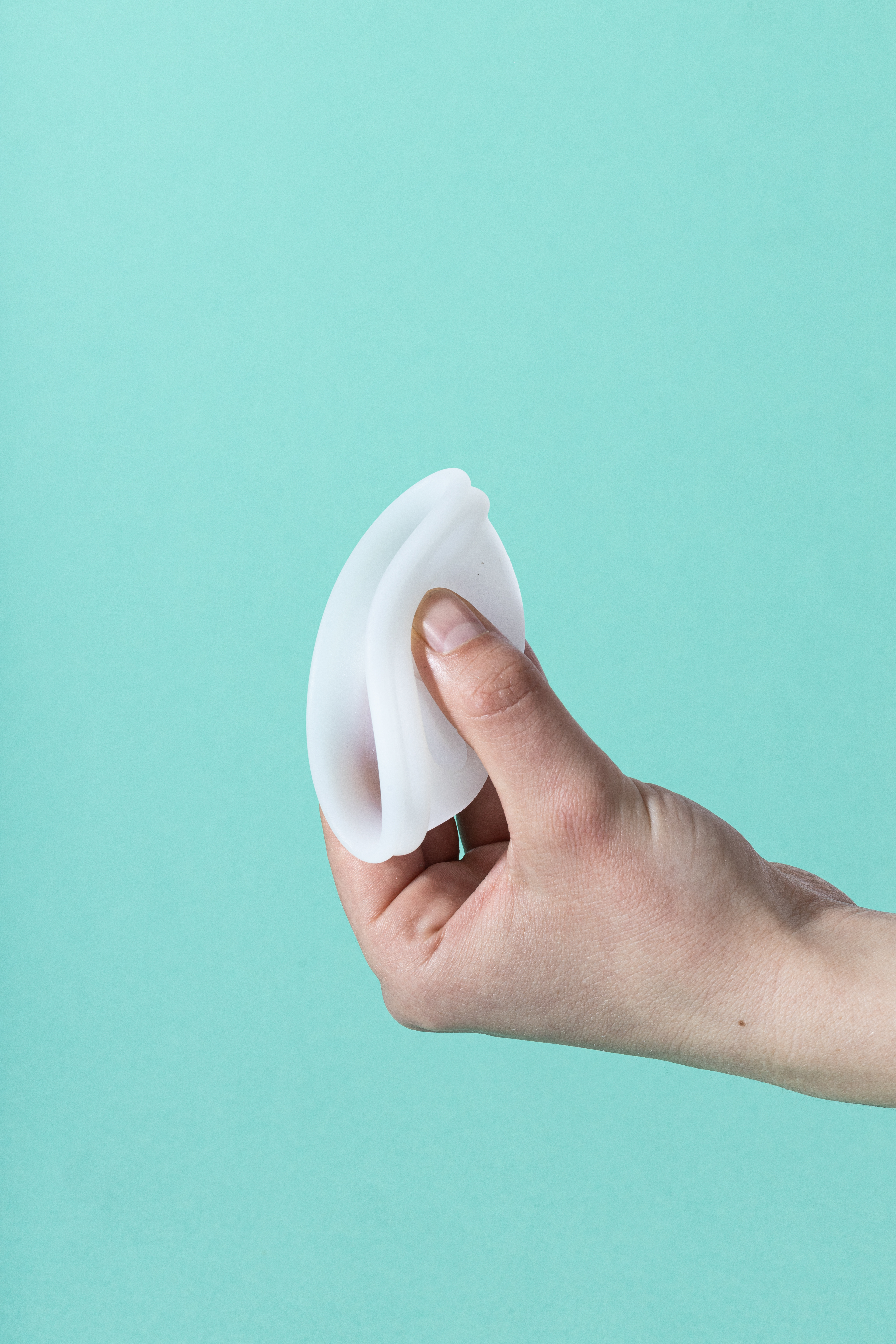
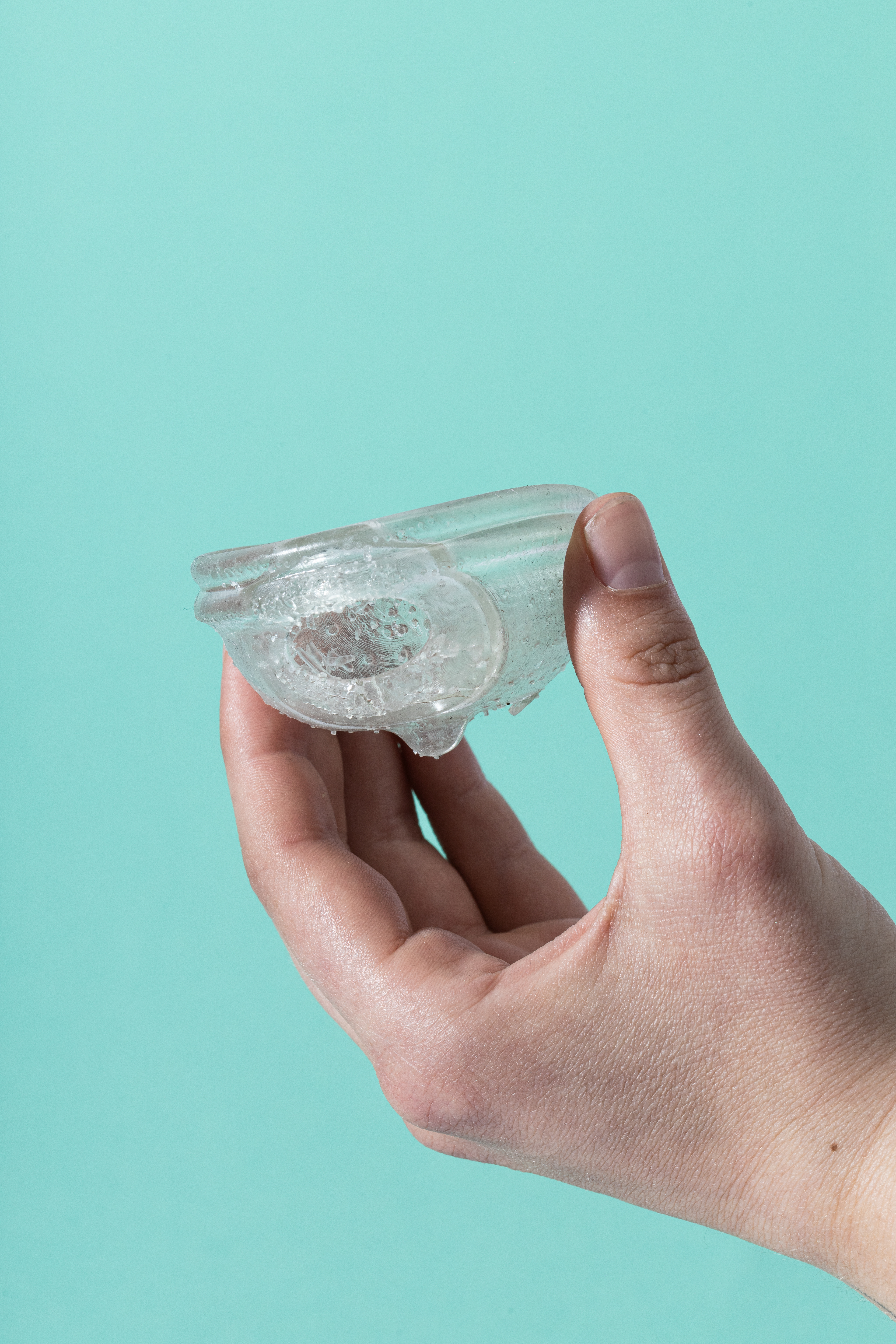
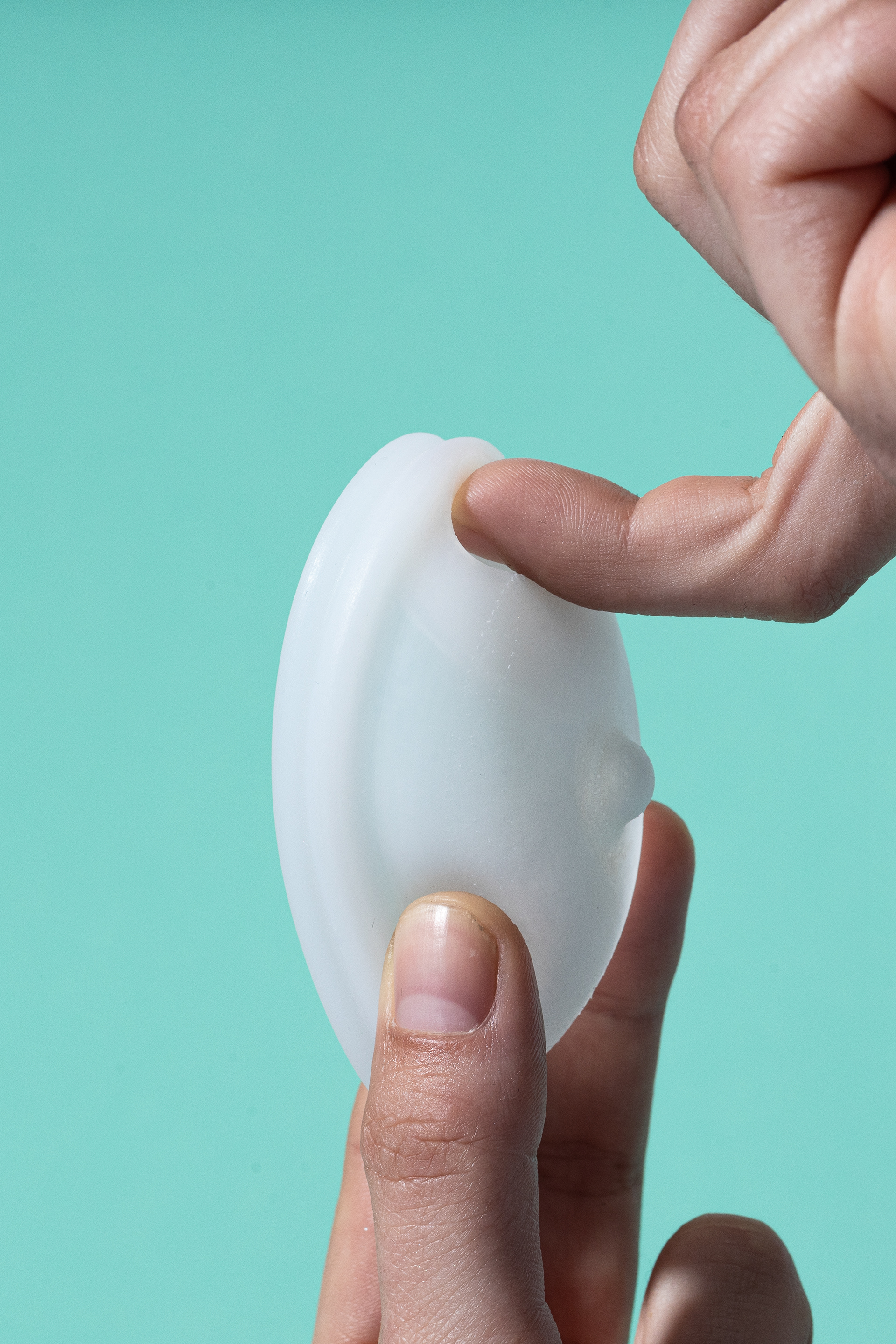
The turning point came with the fifth prototype, which I finally printed in a silicone close to the medical-grade material used in real menstrual products. That was the first time I could test the design under realistic conditions, and what I found was that the pipette and its chamber added too much material to one side of the Carrier, making it impossible to flex and bend evenly.

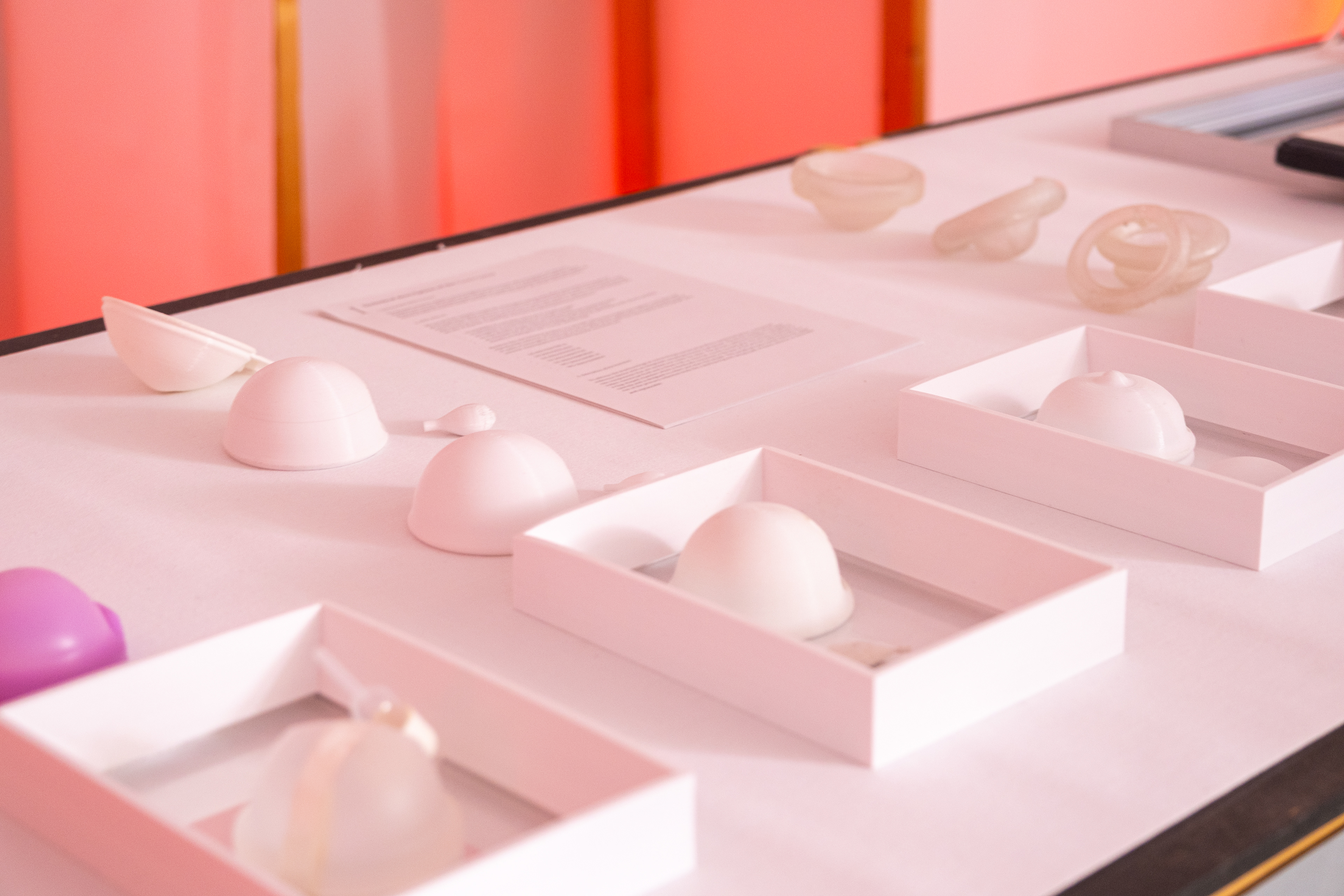
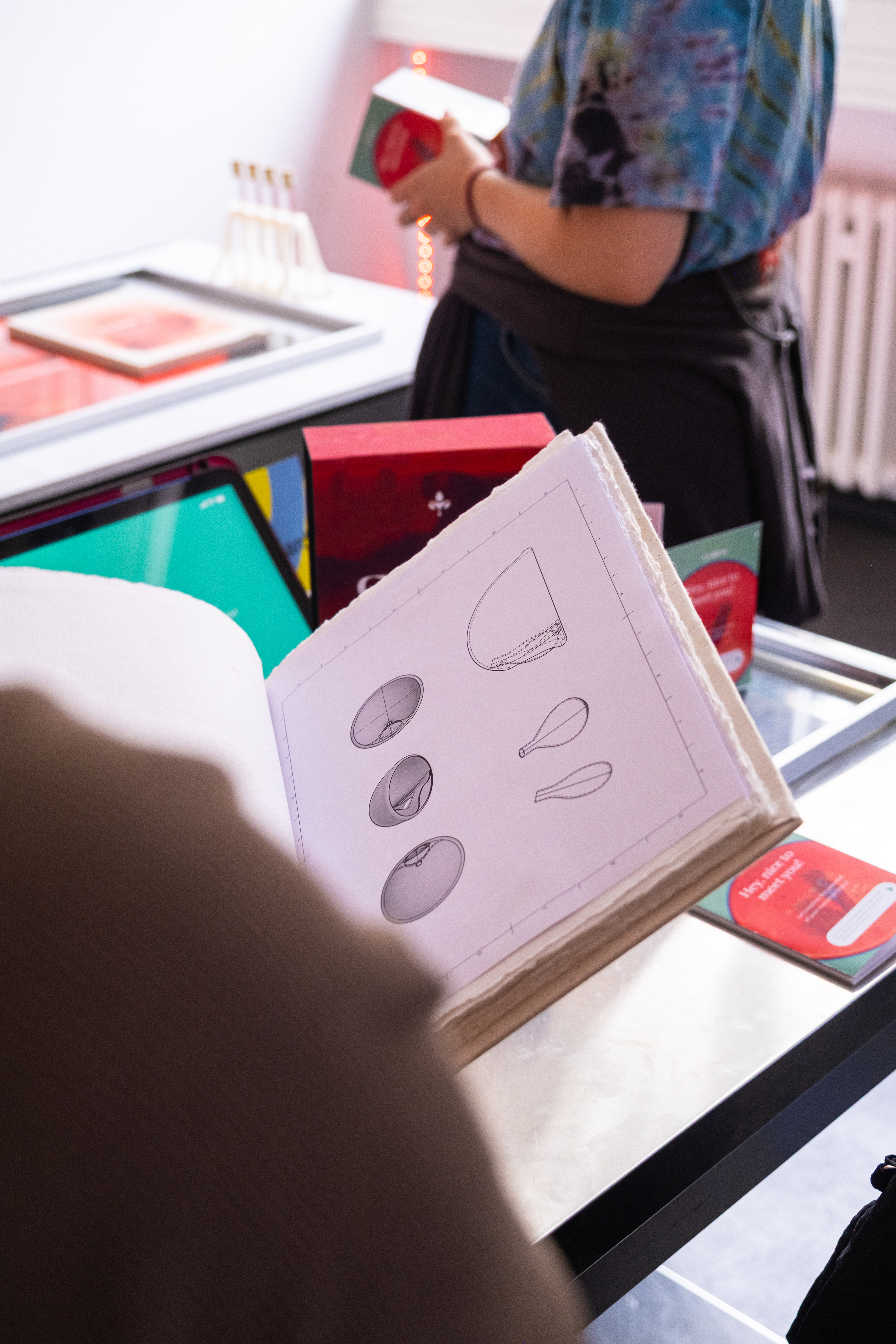
All Prototpes

Final 10 iterations
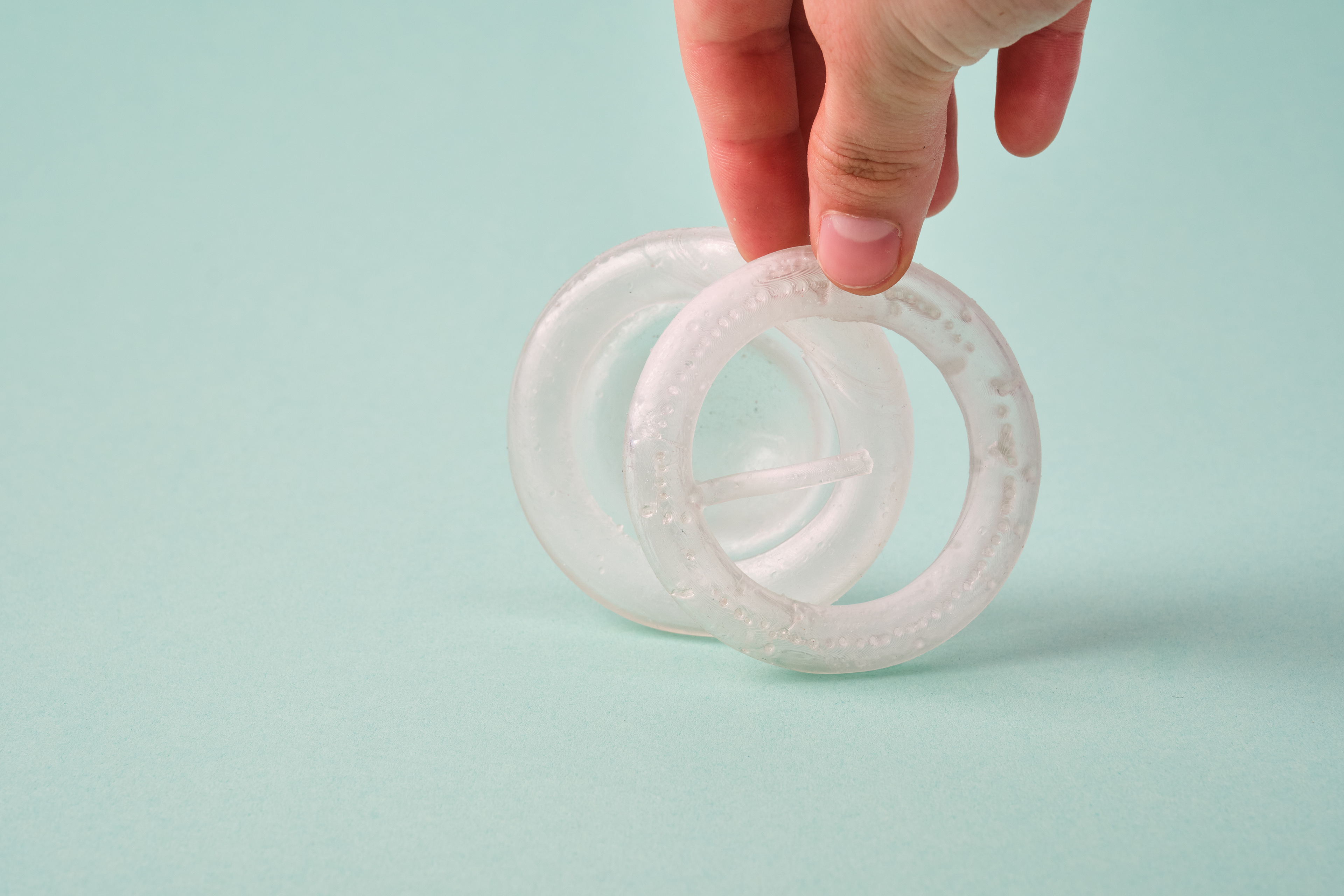
Mechanism of Action
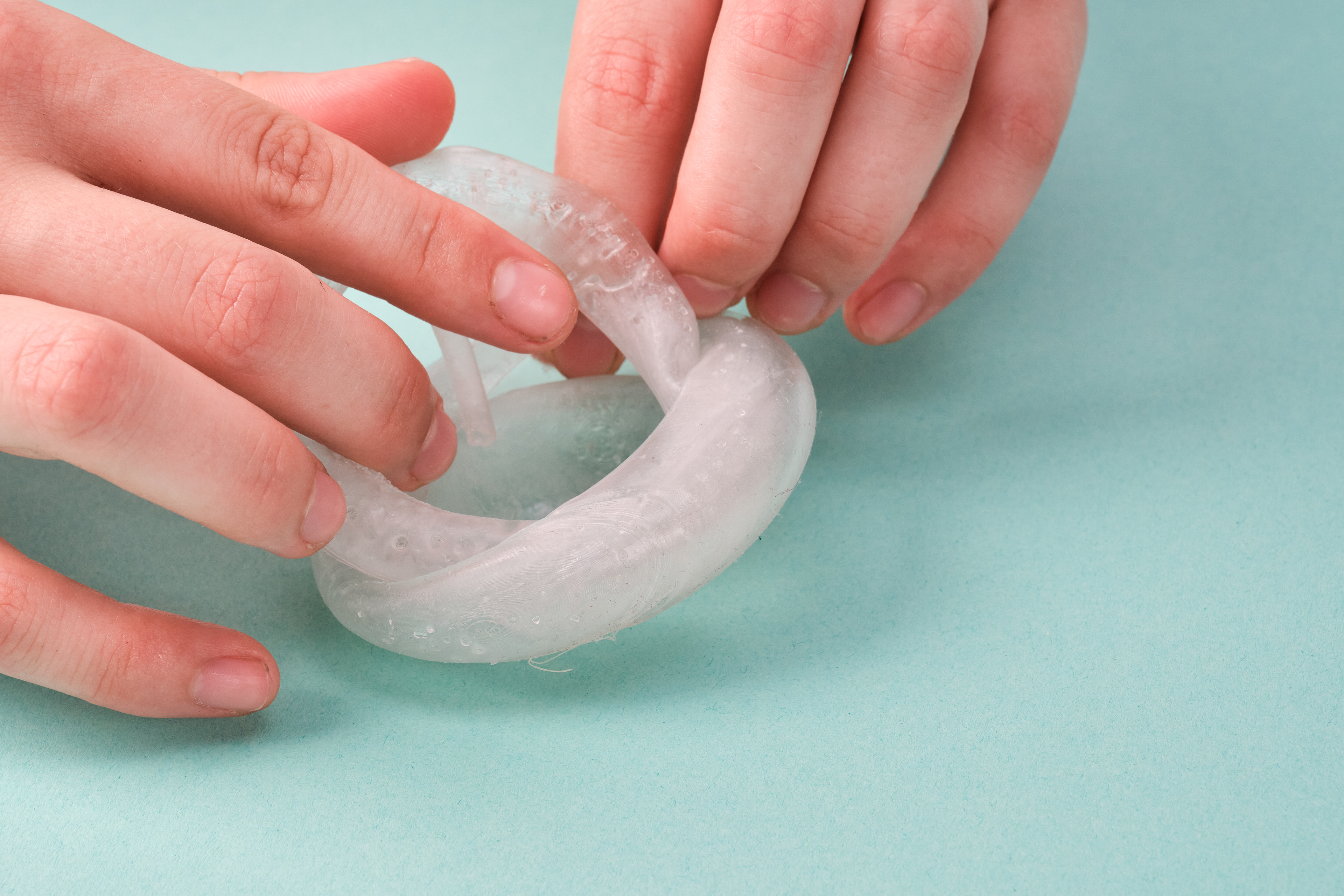
Mechanism of Action
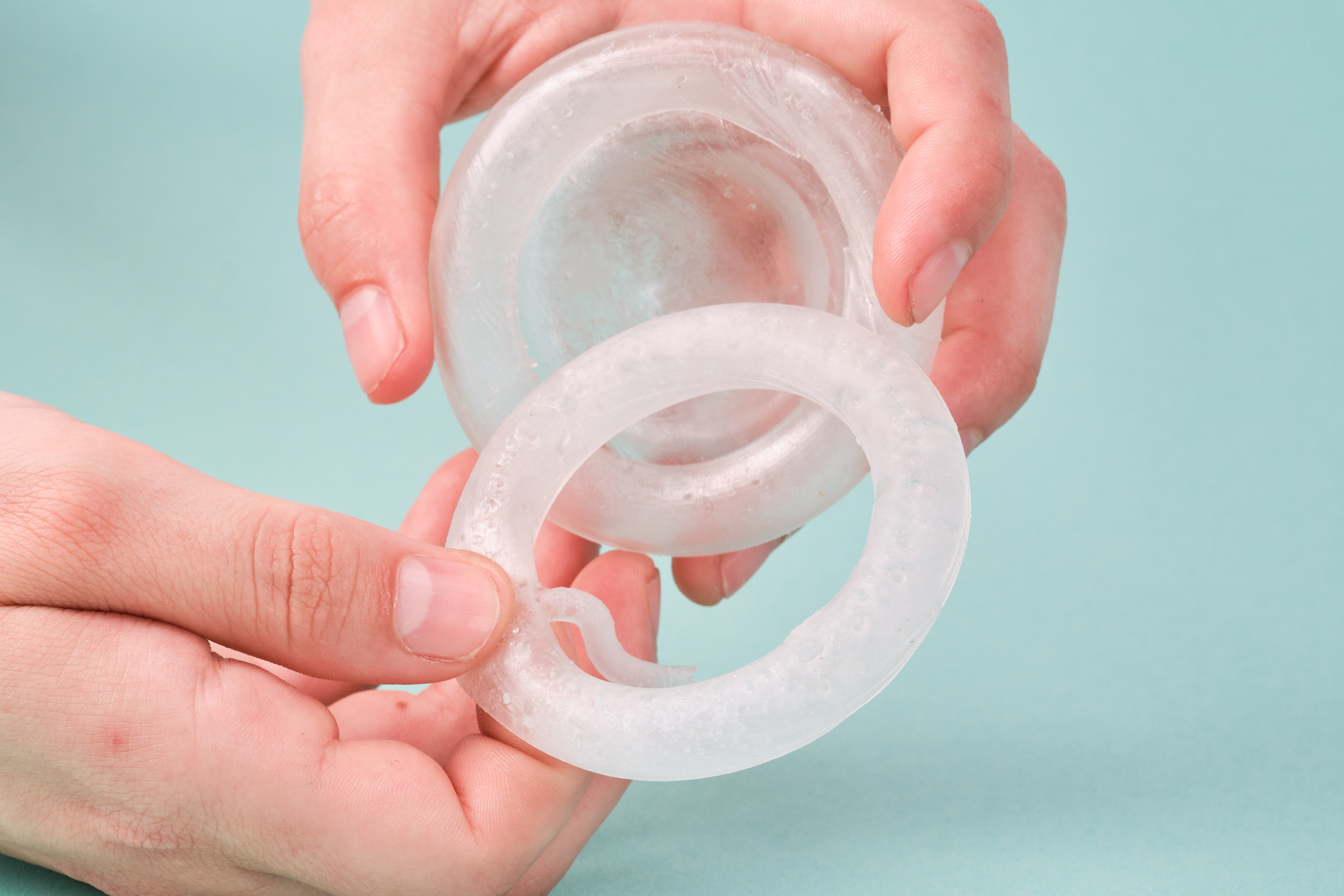
Mechanism of Action

Latest Prototype
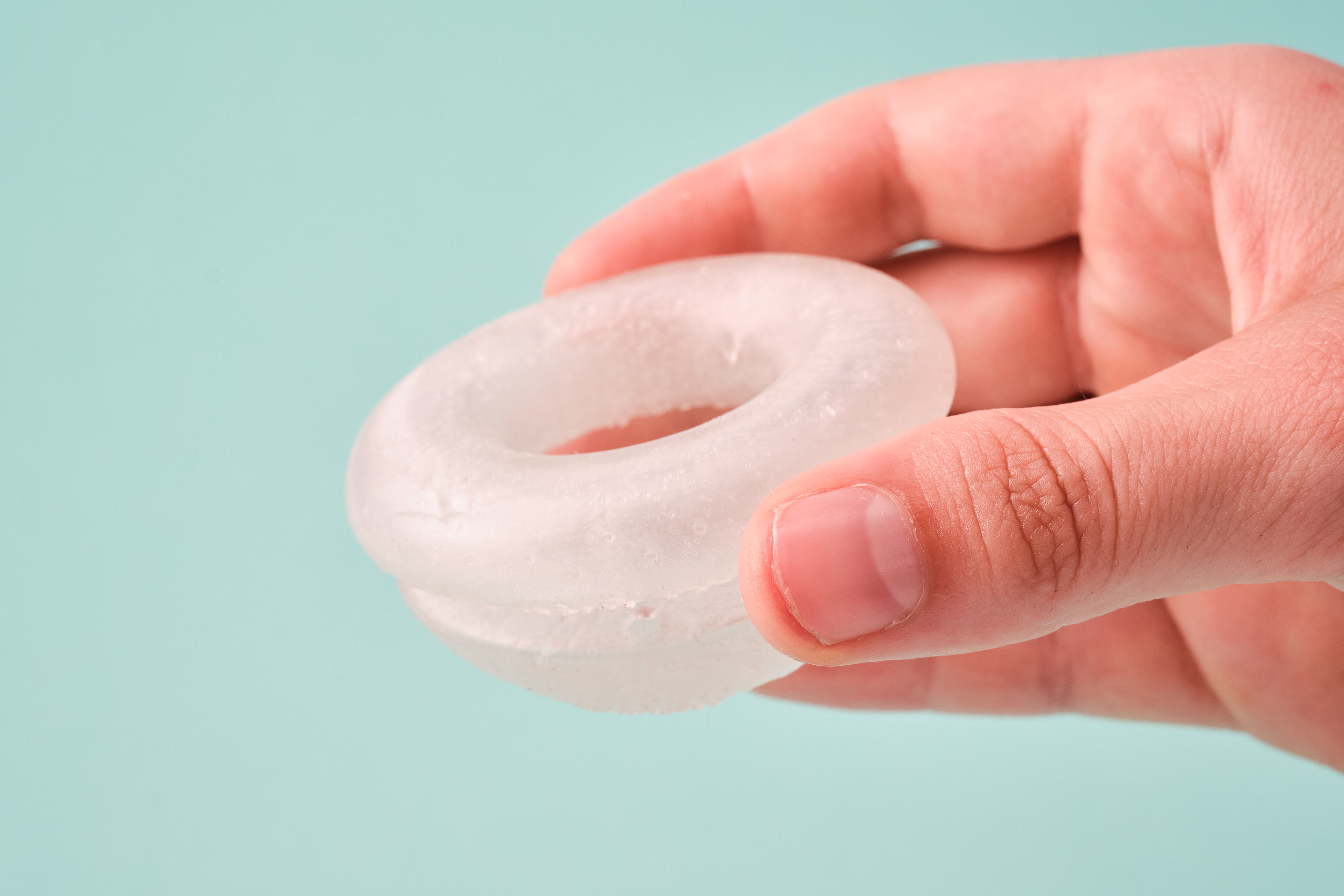
Latest Prototype
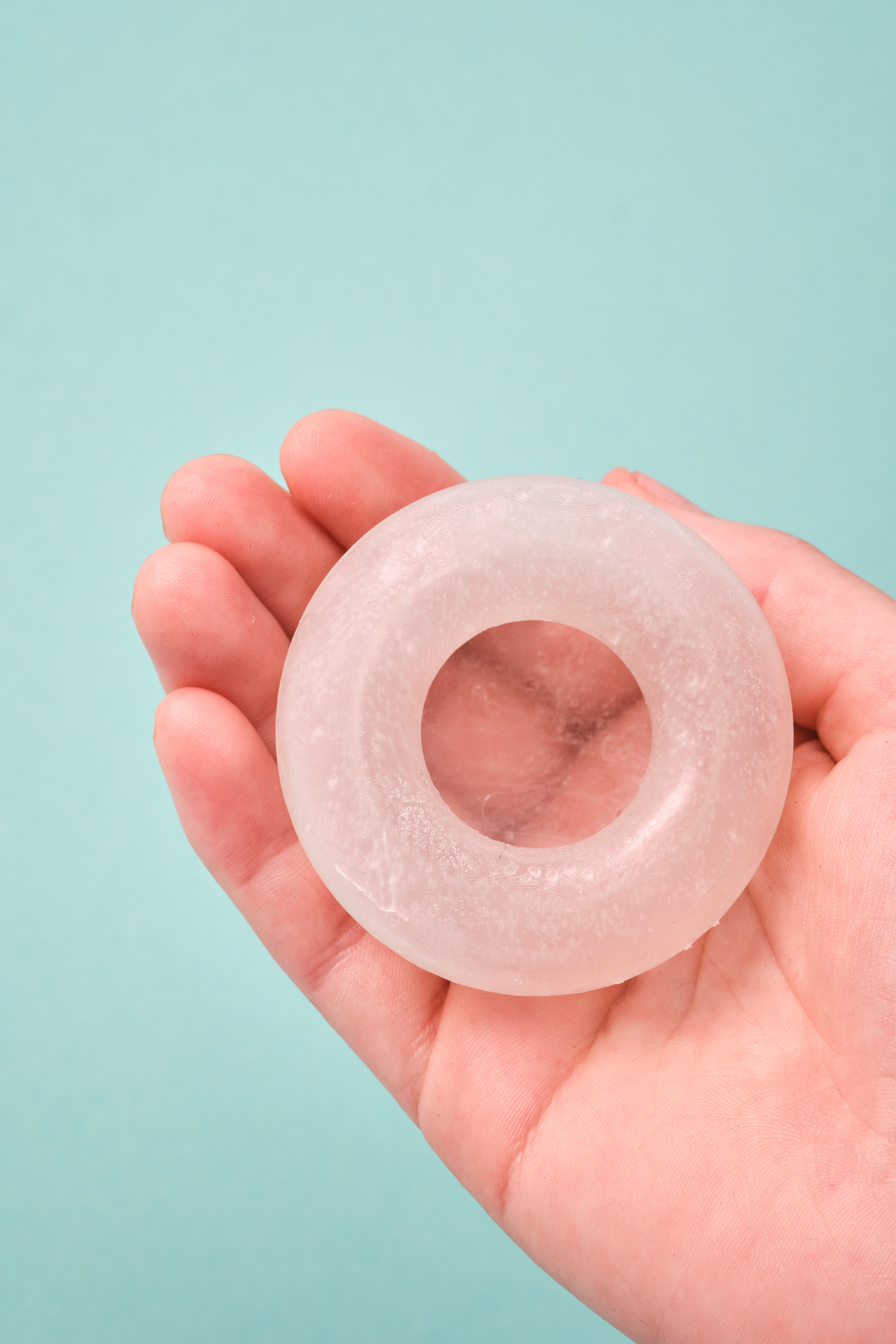
Latest Prototype
So I redesigned it: the pipette was replaced by a Sampling Ring. The Ring form ensures that now the material is evenly distributed which was crucial for the overall flexibility of the product. From here, I moved to SLA printing in biomedical resin, which is the point where this stopped being a craft project and started becoming a device.
The tenth and final prototype is the smallest and most insertable version yet. It holds 5.7 millilitres and, unfortunately, is not printed in real silicon like the fifth one, because the company that prints it was unable to do so. But this is just the next challenge to overcome and I will address it in my next steps.
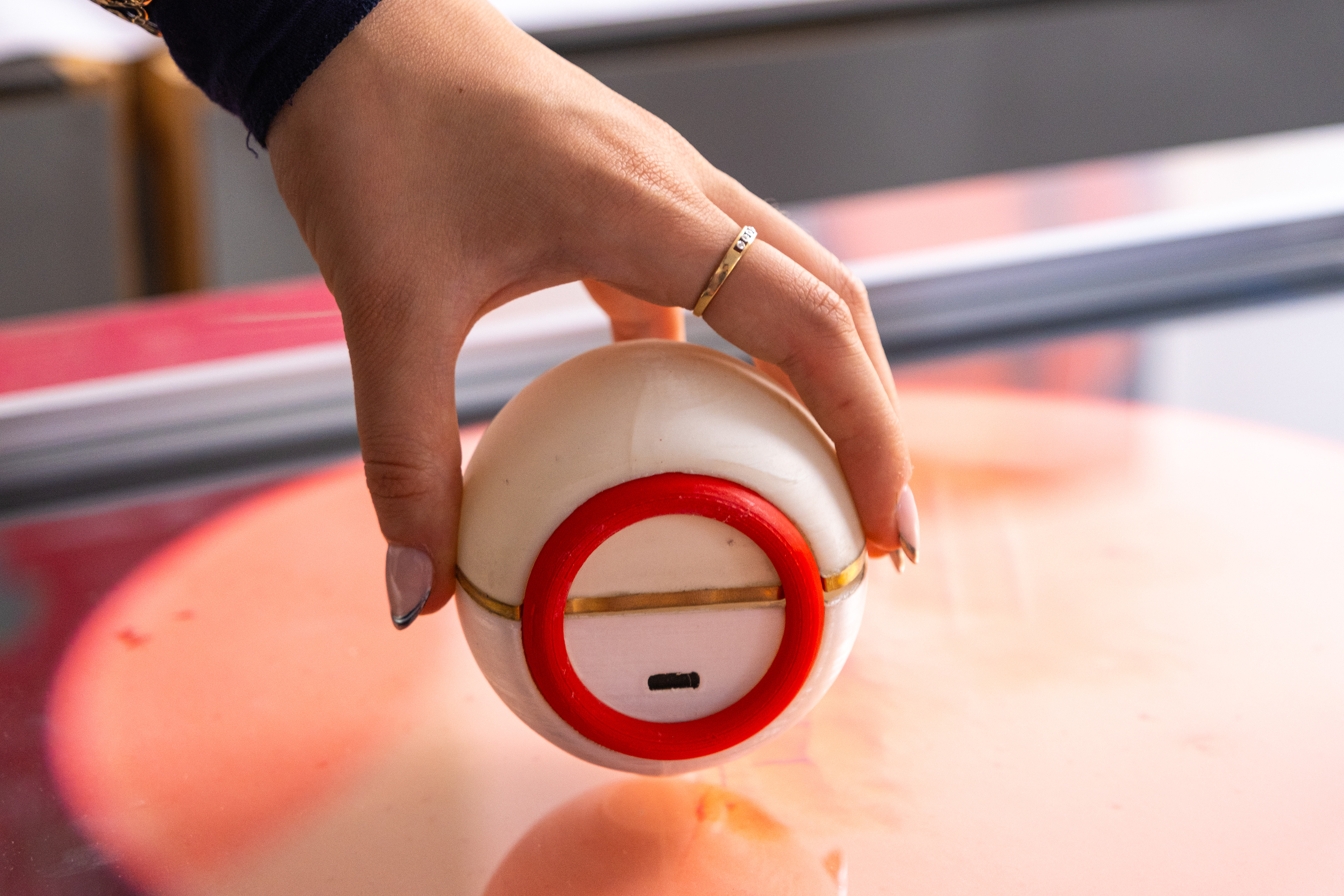
To bring the Carrier into context I now want to introduce my visual prototype of the Analyser. This is the real speculative part of my project and I mainly prototyped it because I want to put the whole system into context.
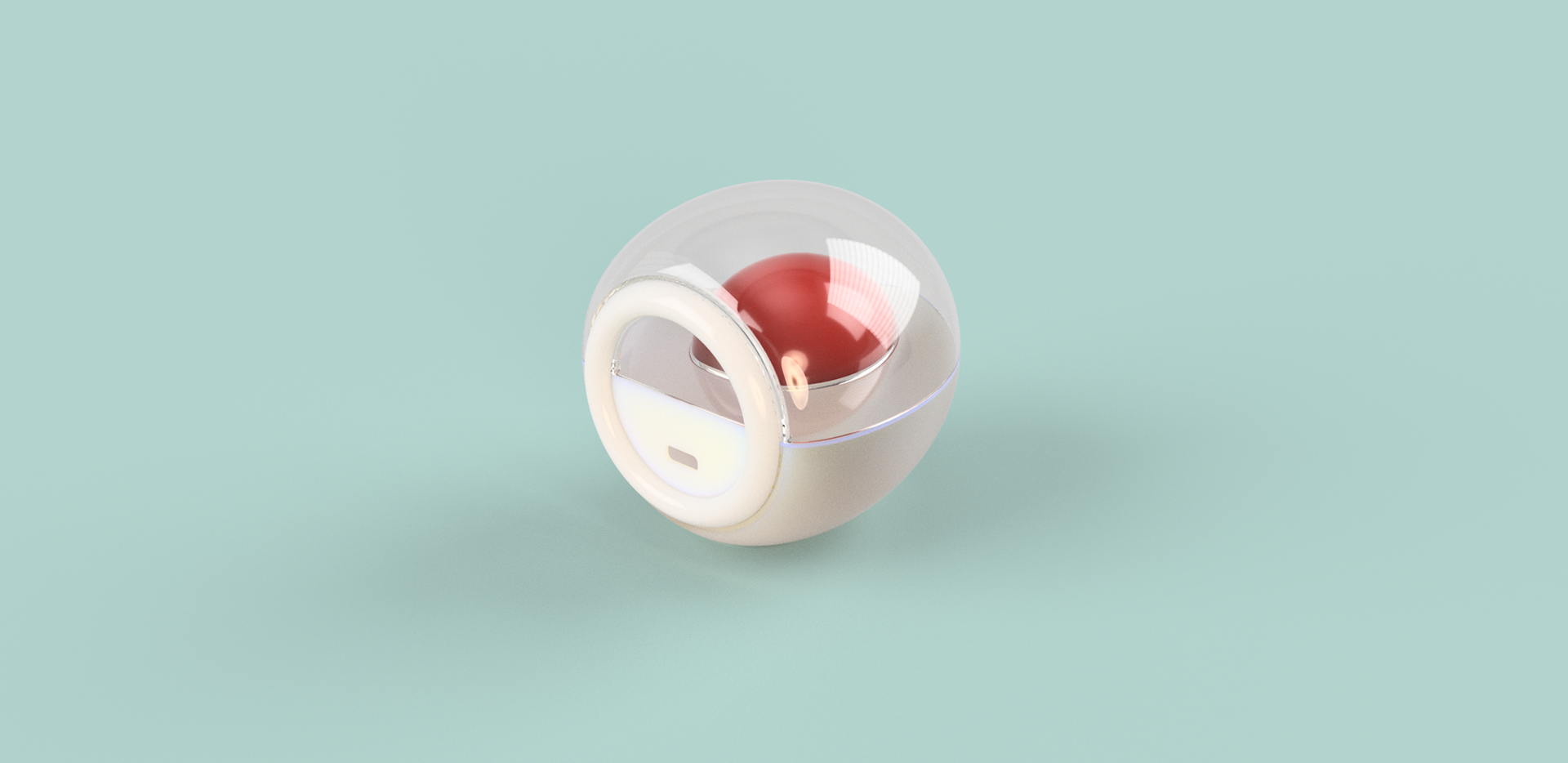
Rendering of the Cuora Analyser
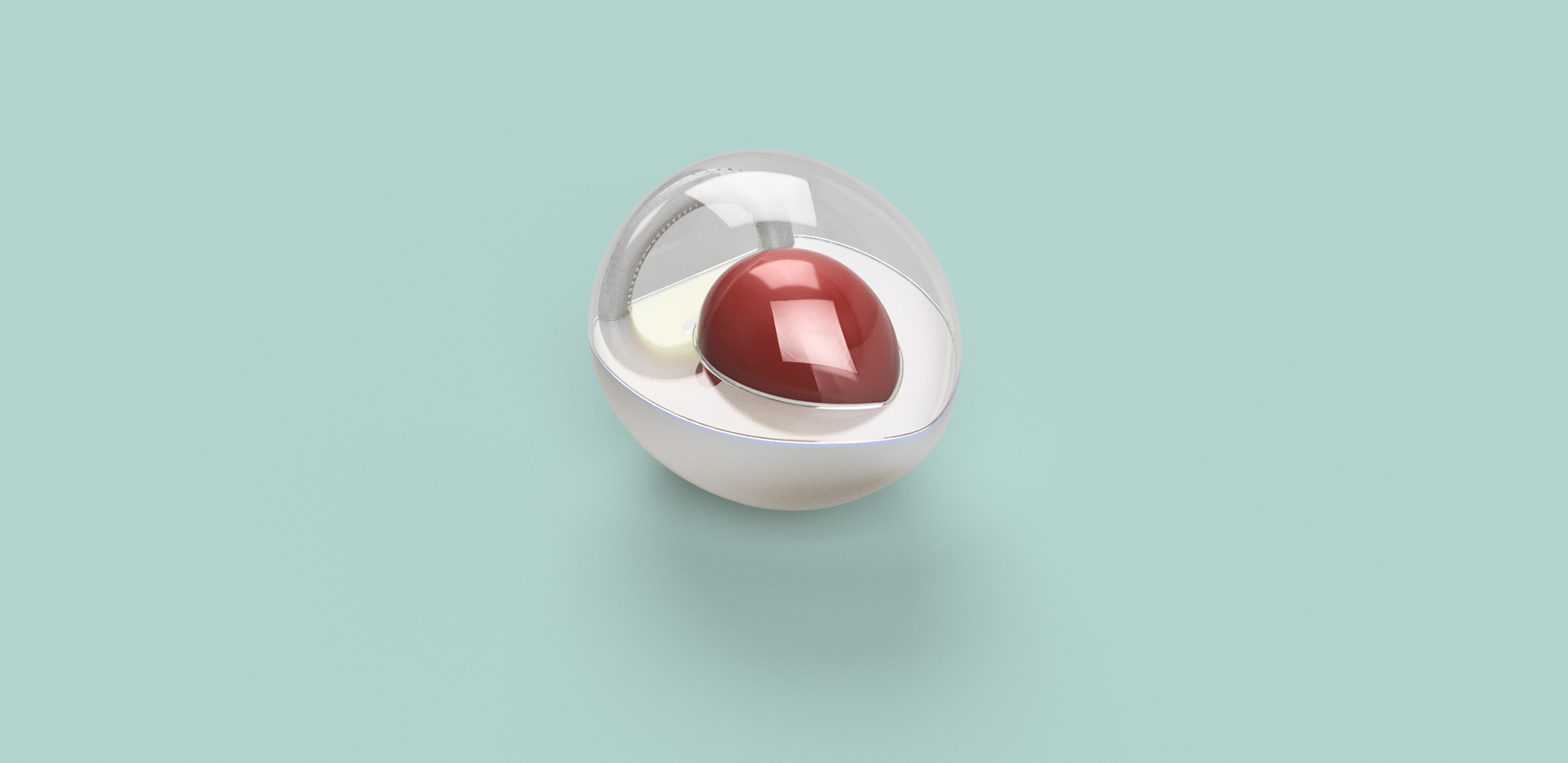
Rendering of the Cuora Analyser
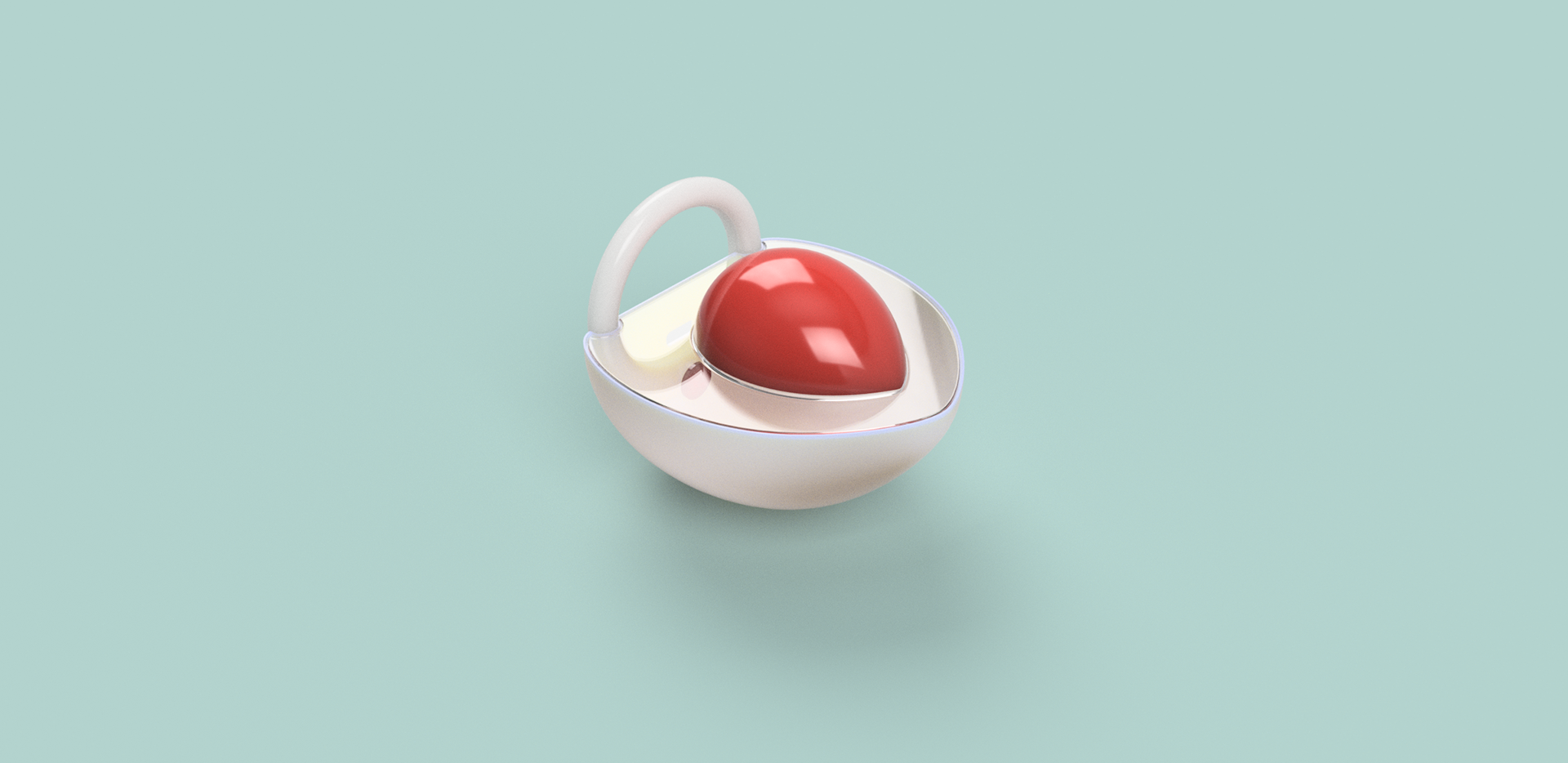
Rendering of the Cuora Analyser
For the design I researched existing hormone analysers and read the scientific literature on MenstruAI’s approach to menstrual blood testing. Based on my findings I decided to design a small visual prototype of the Analyser under one design condition: it should nest the Sampling Ring inside. According to the speculative Users Workflow the user would collect their menstrual effluent with the Carrier, then seperate the filled Sampling Ring and insert it into the Analyser where the sample is further processed.
Throughout the entire prototyping process, I felt as though I was venturing into unfamiliar territory, with no solid scientific foundation to draw upon. This was both scary and exciting. No one really designed a menstrual product for sample collecting purposes before. That is why the question of patenting arose very early on. After much deliberation and consideration, I have actually decided to actually apply for a patent.
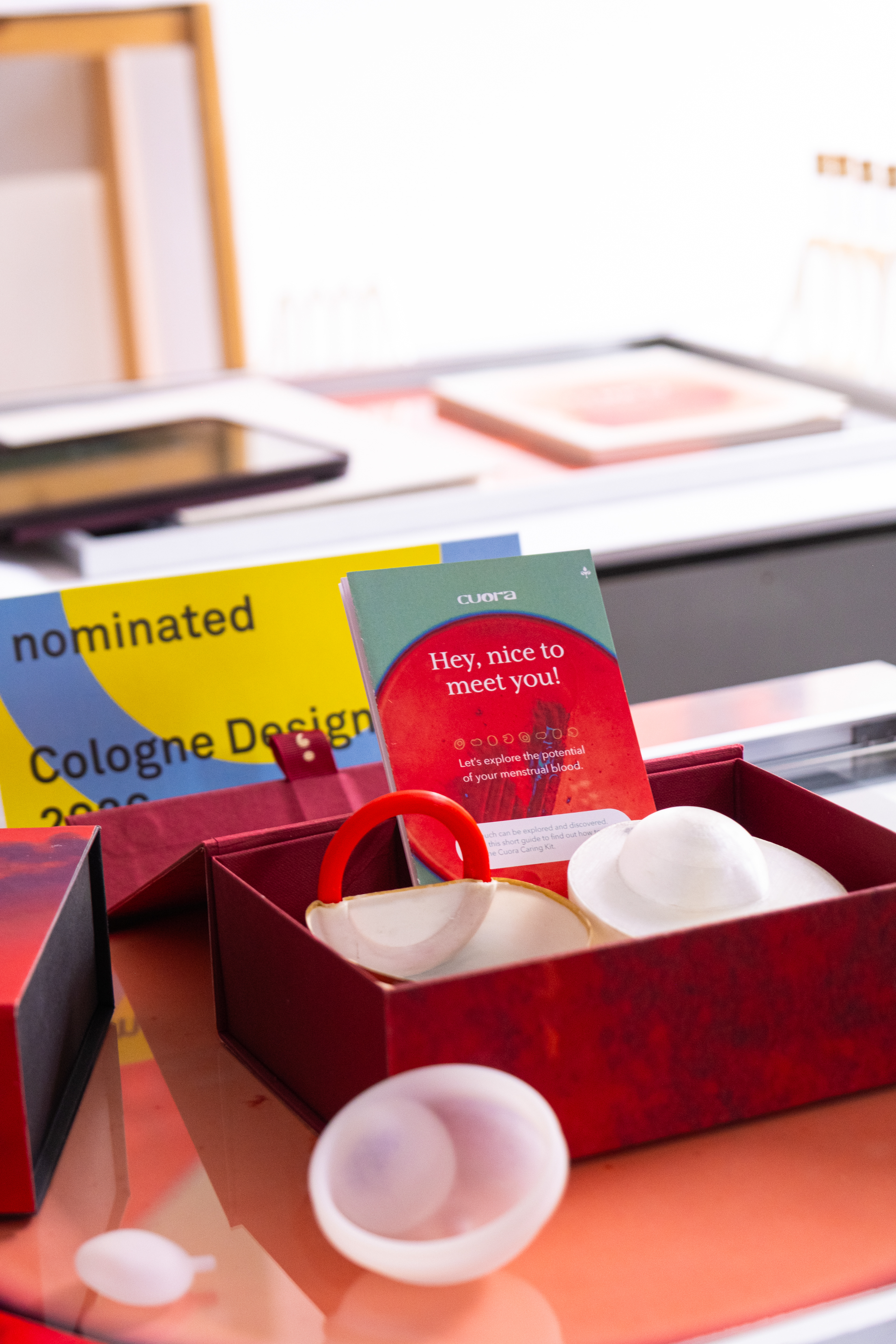
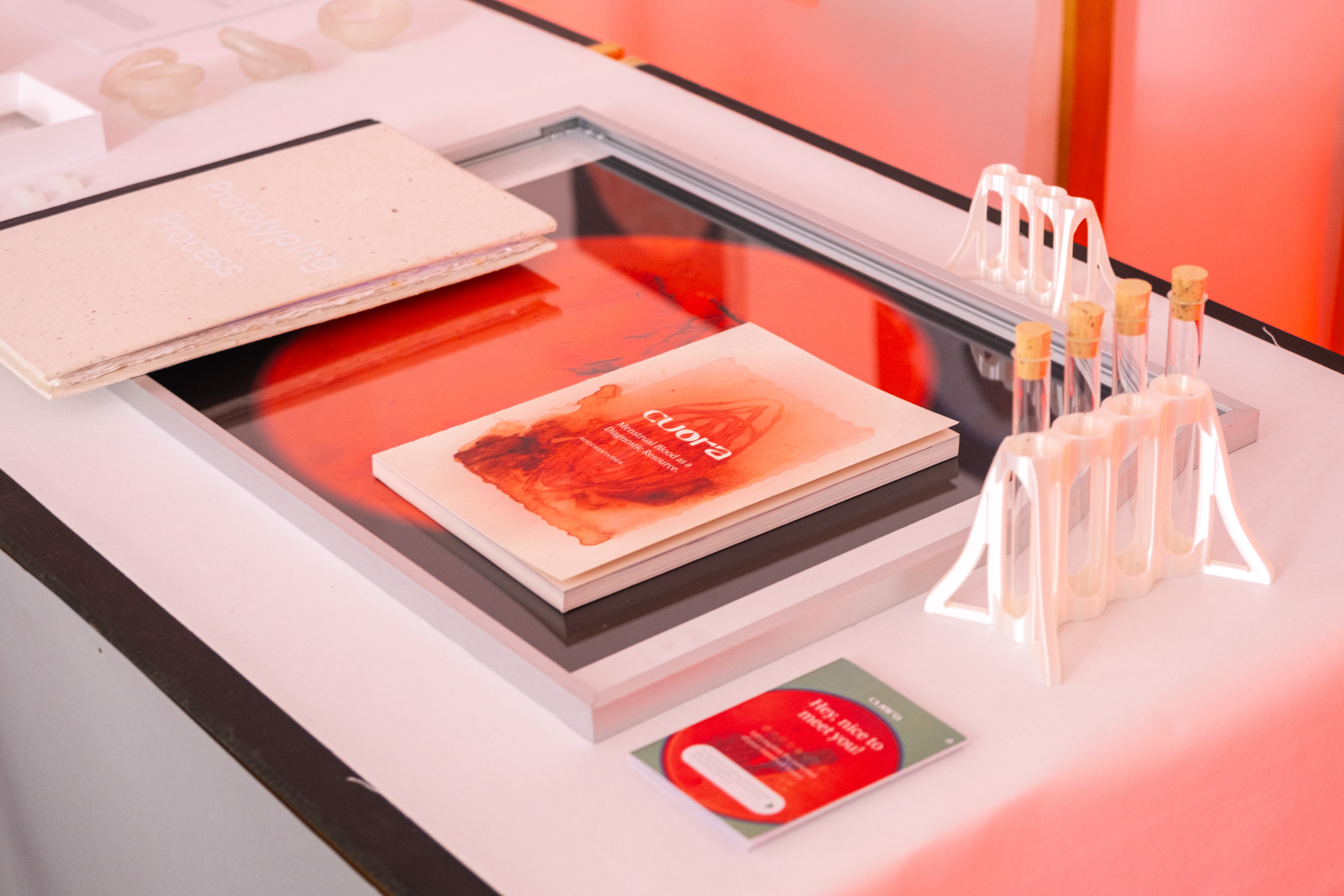
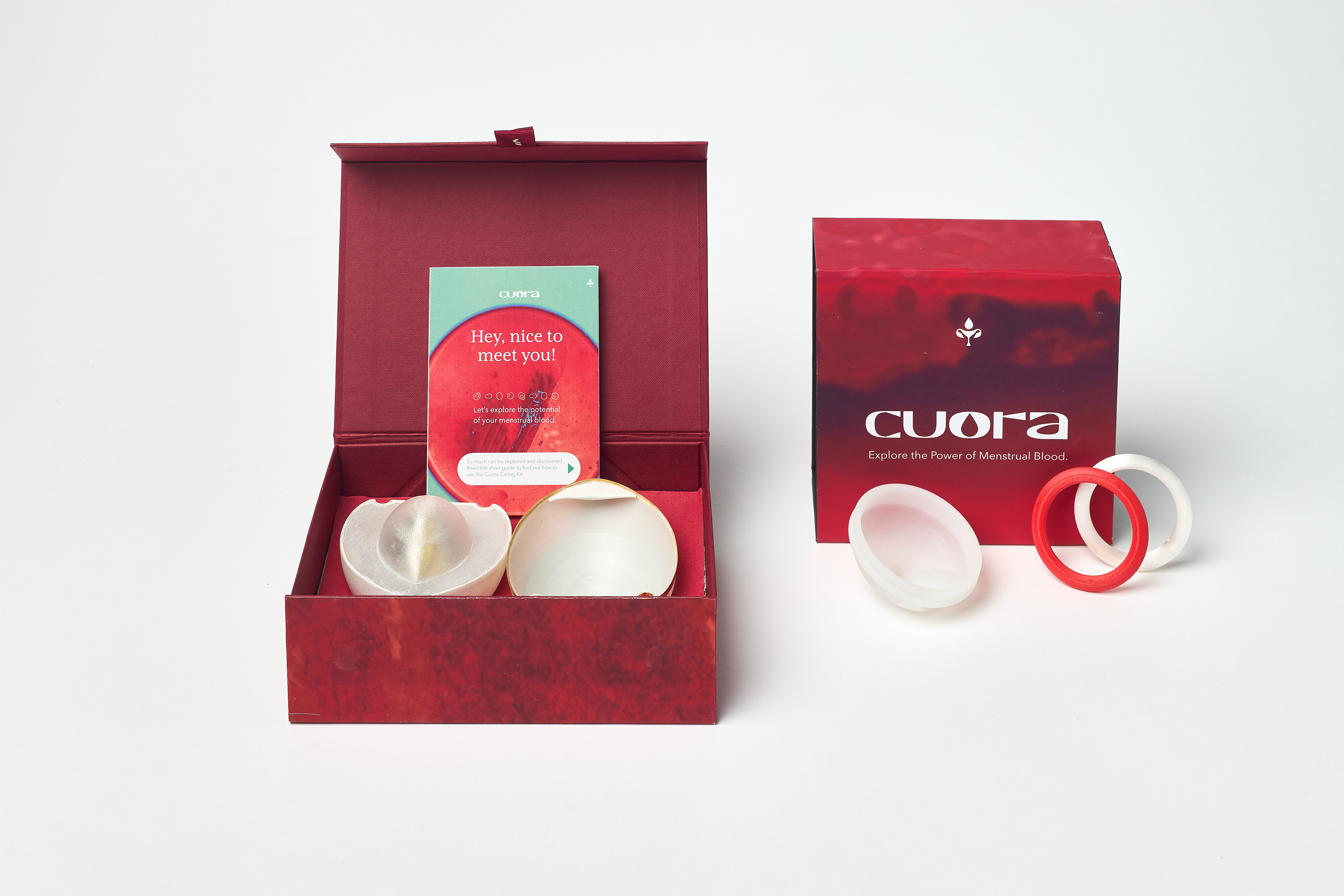
Finally I designed the User Manual, the full Branding Identity and the Packaging for the Cuora Caring Kit.
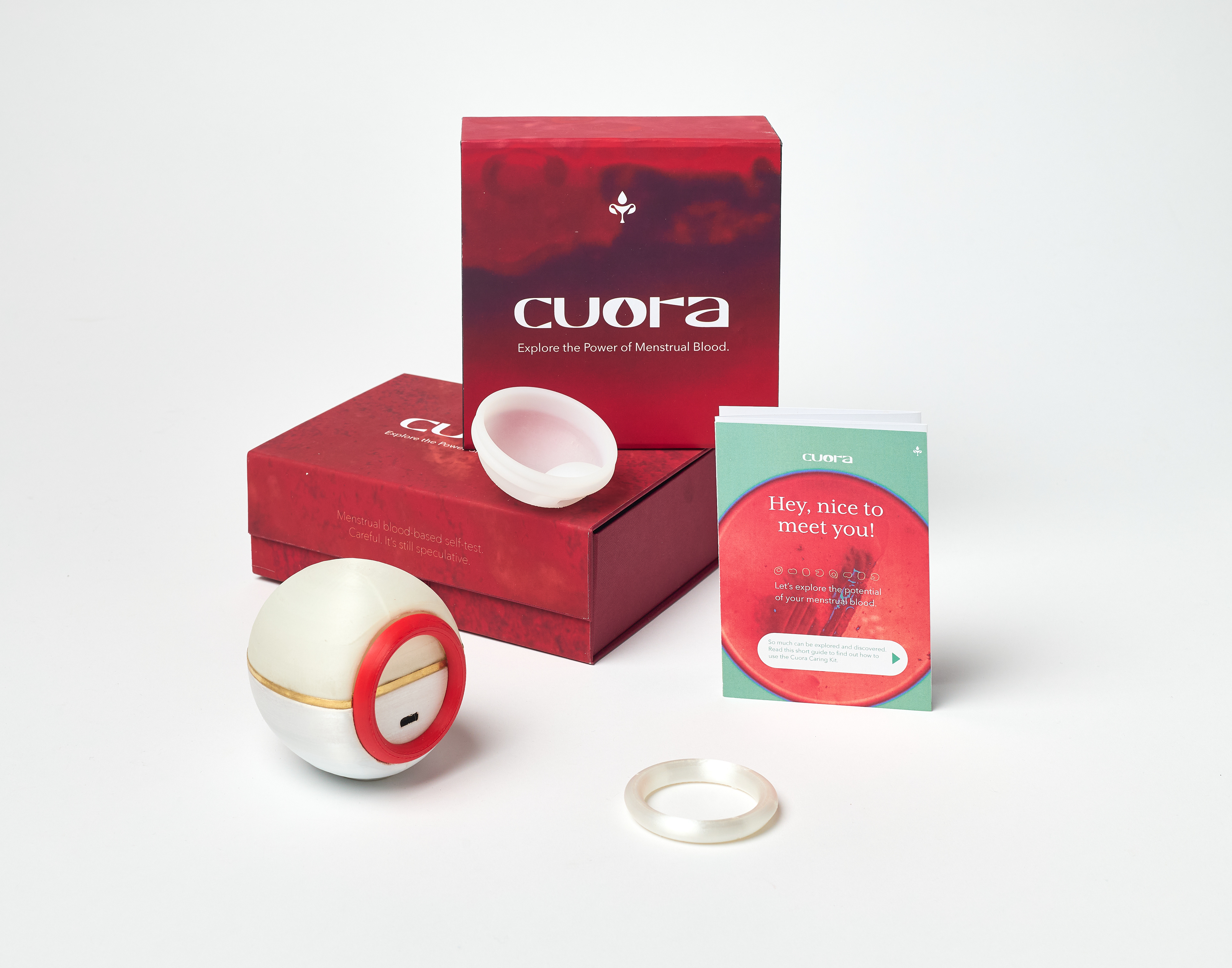
The full Cuora Caring Kit
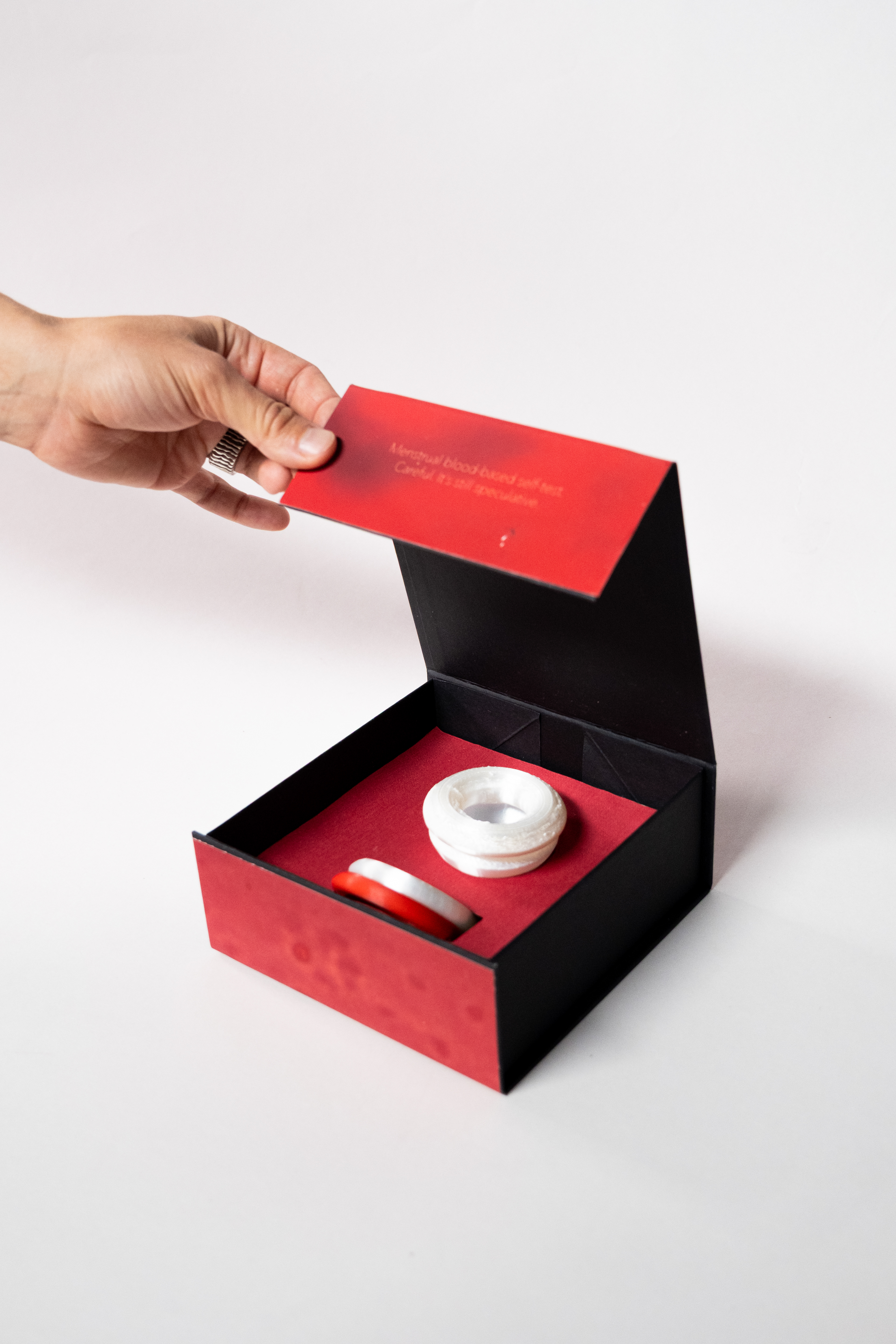
The packaging for the Cuora Carrier
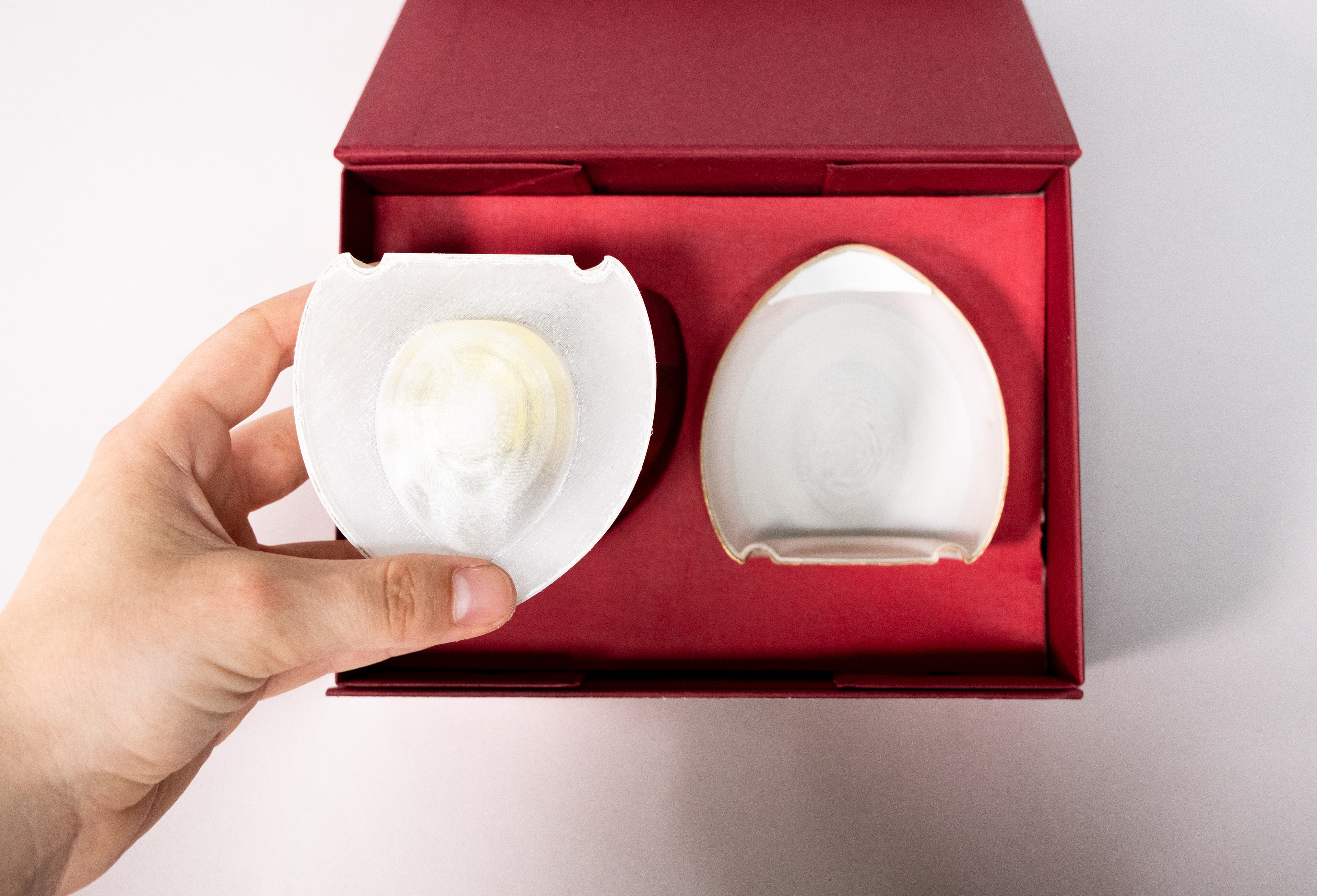
The packaging for the Cuora Analyser

The packaging for the Cuora Analyser
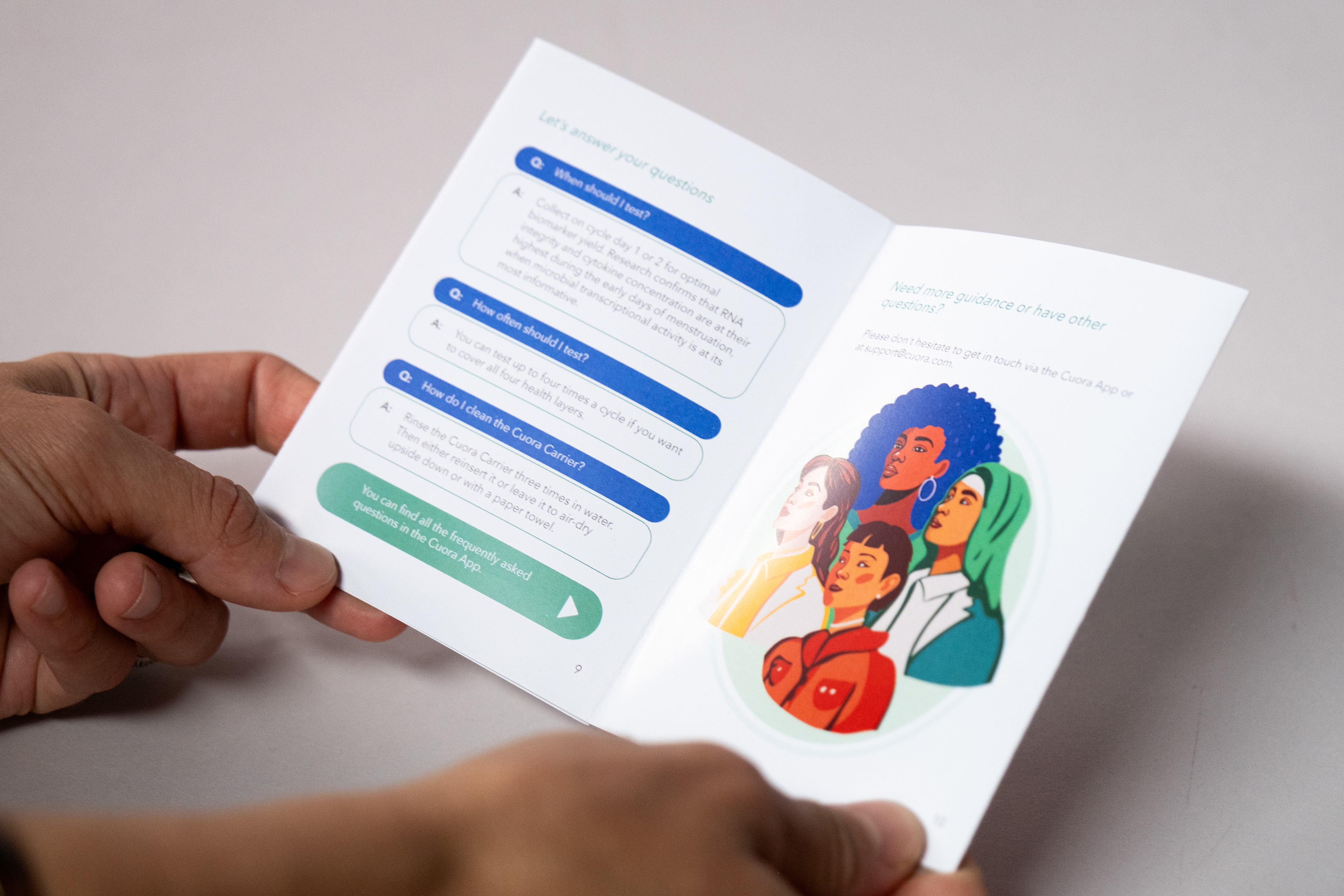
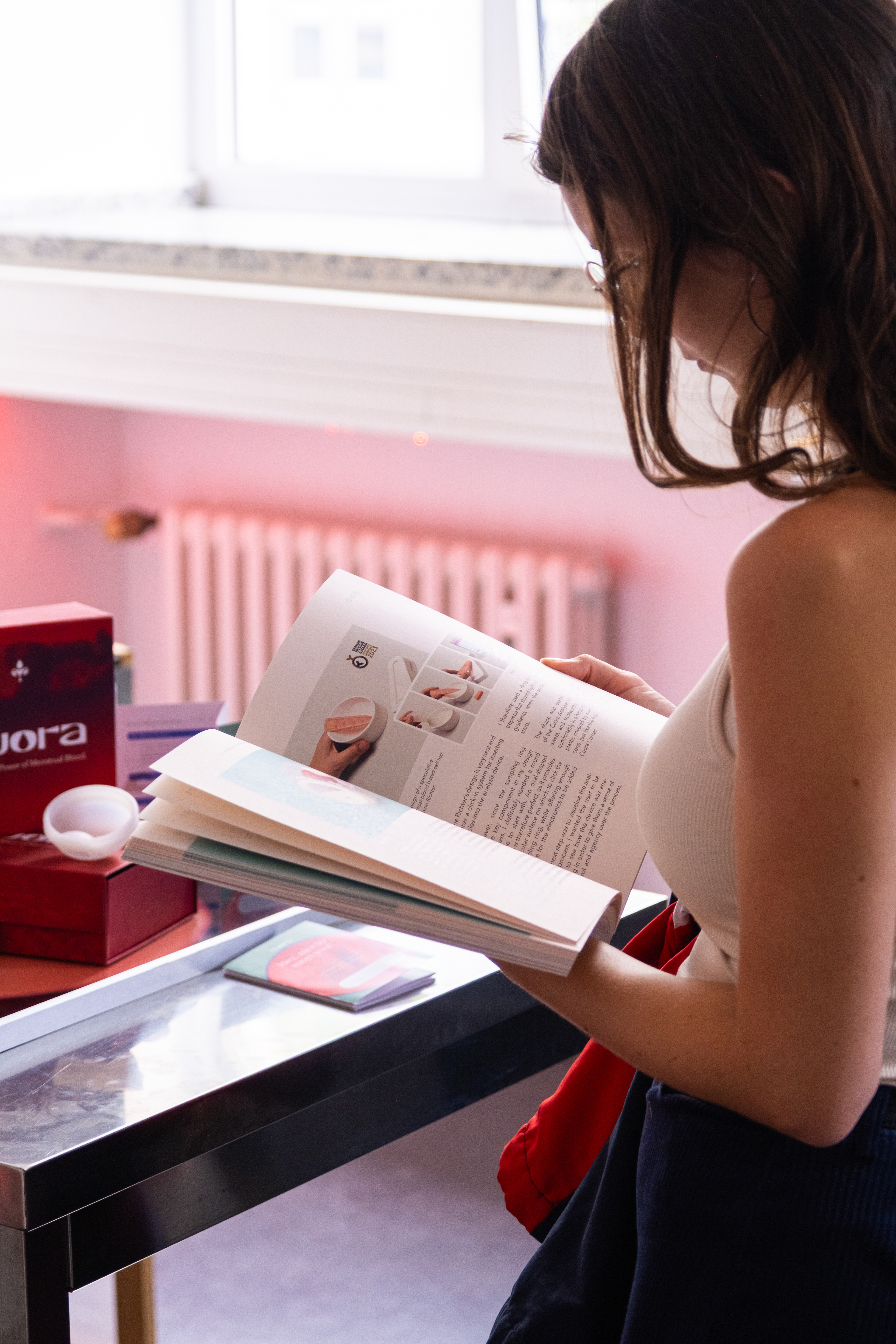
The User Manual
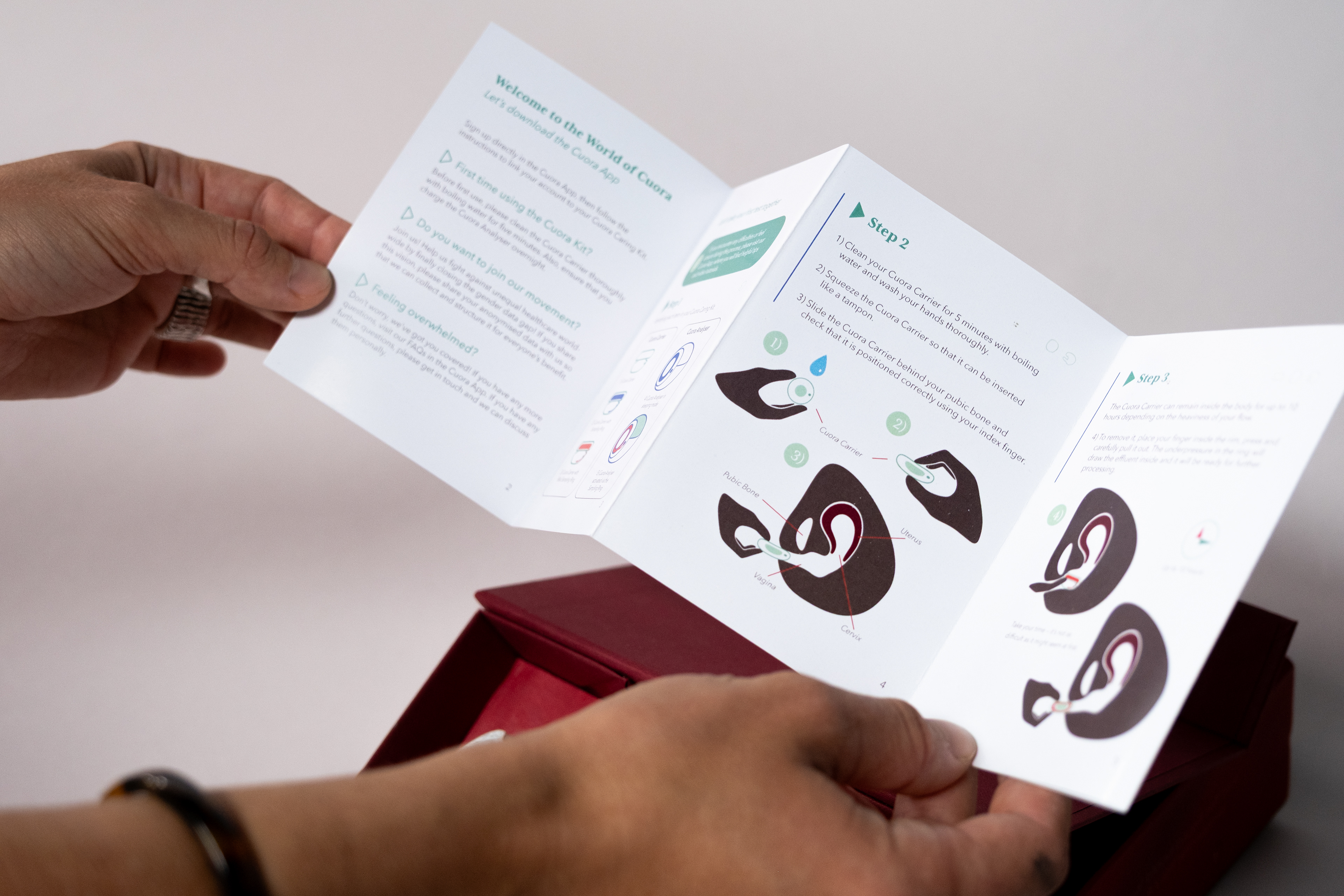
The User Manual
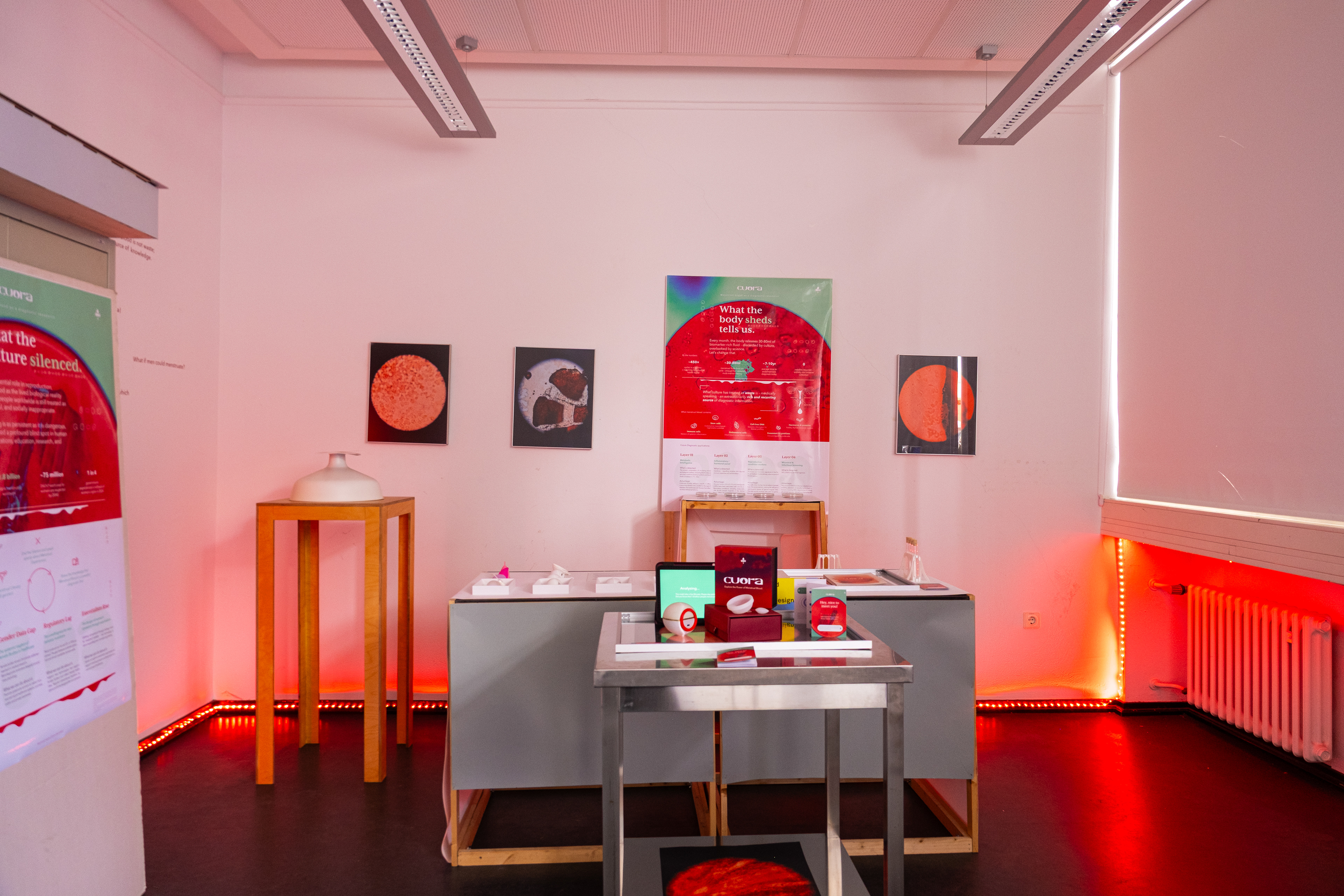
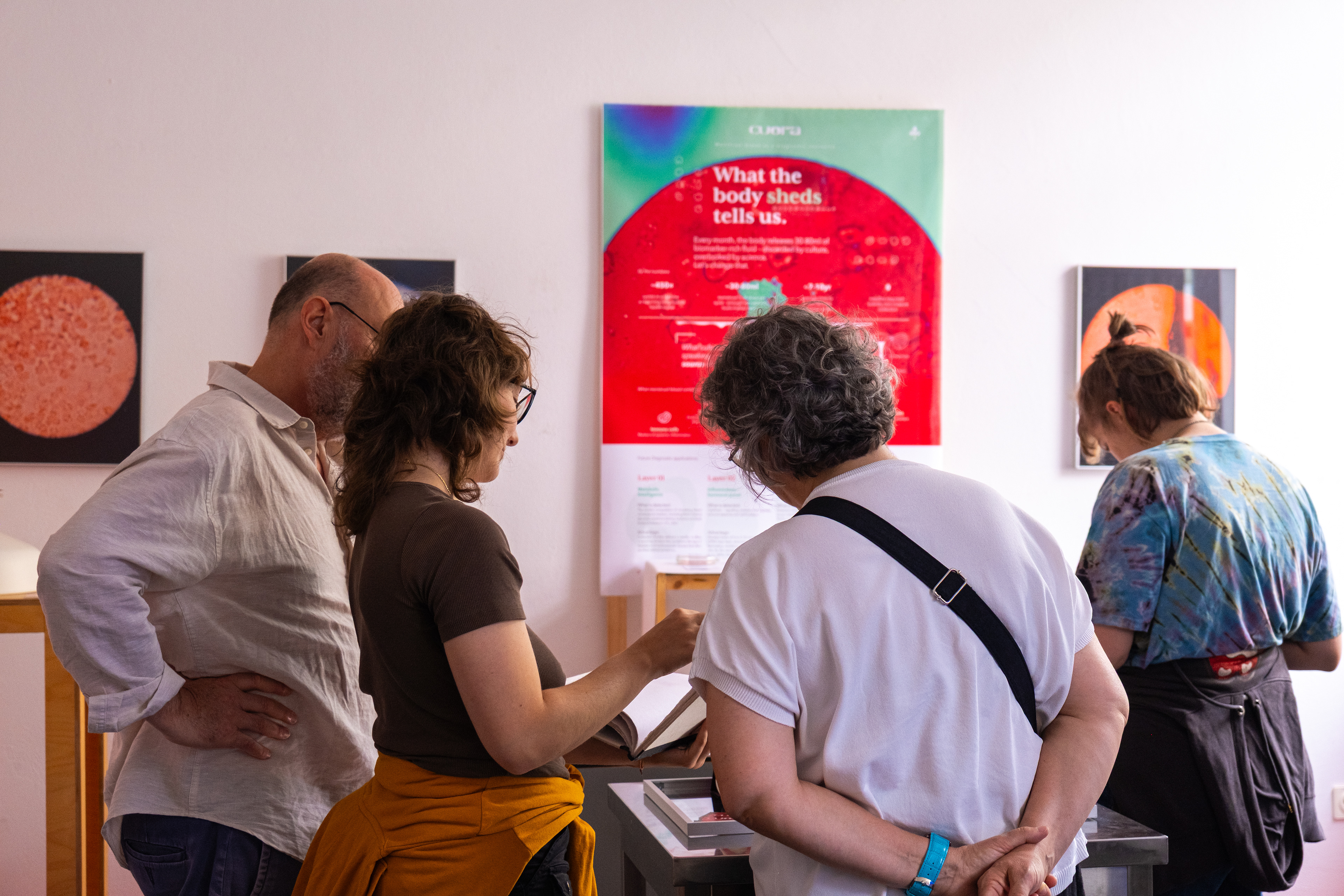
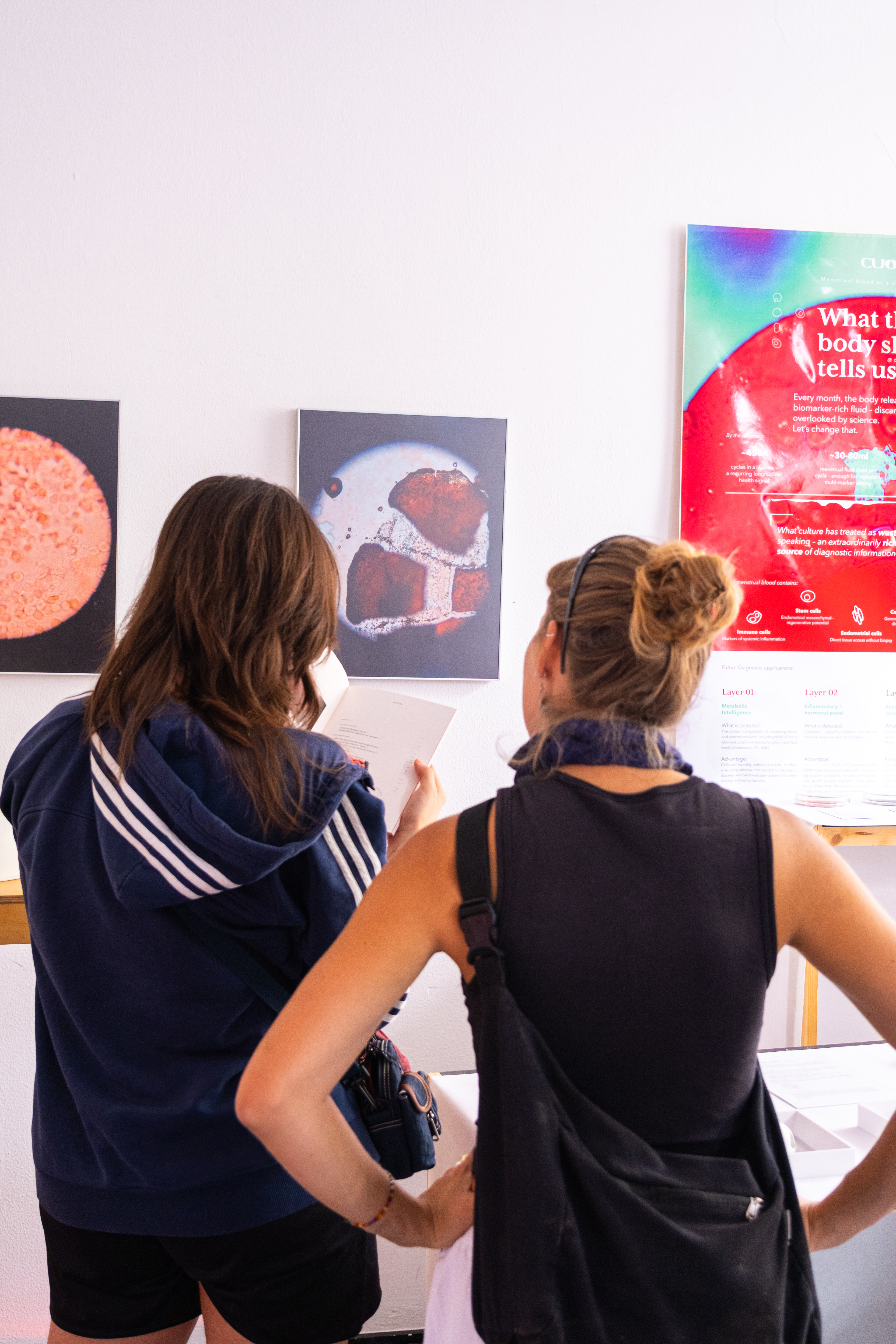
Ultimately I was able to exhibit my project at the final Bachelor's exhibitions at the Köln International School of Design and got nominated for the Kölner Design Award.